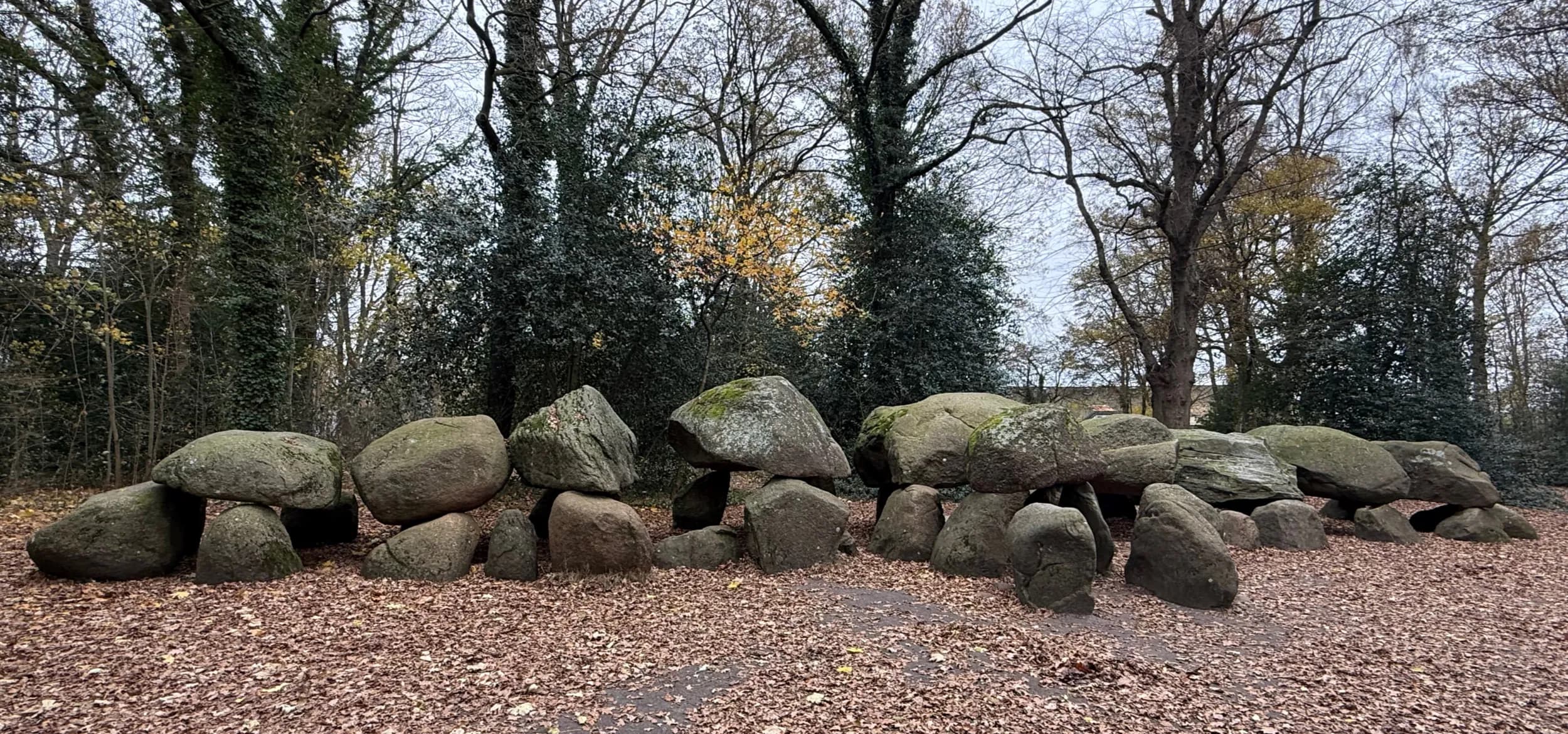
Seeing the hunebedden as they once stood

Bringing the Hunebed Builders Back to Life
Across the province of Drenthe stand dozens of hunebeds, giant stone tombs older than the pyramids of Egypt. They are the oldest monuments in the Netherlands. But the people who raised them, the hunebed builders, and the world they lived in, vanished more than five thousand years ago.
Today we are proud to announce a project that brings that world back.
Together with the Hunebedcentrum in Borger, and with the support of the Cultuurfonds, TimeLens is reconstructing the life of the hunebed builders and setting it back where it happened. Work begins now, and we aim to complete it by the end of this year.
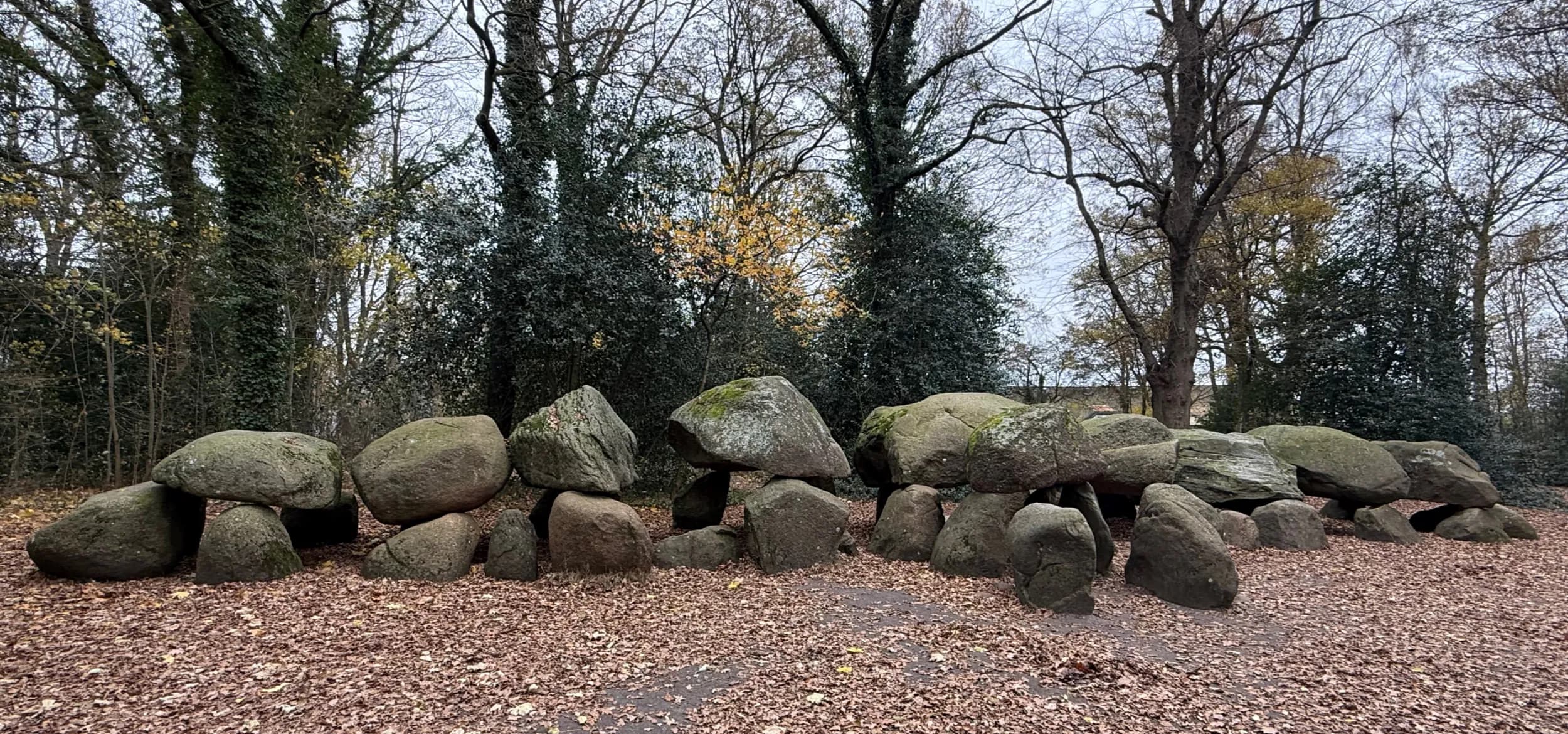
The hunebedden were not heaps of stone. They were chambers, raised with intent, used and revered. Working from the real stones and from the expertise of the team at the Hunebedcentrum, we are reconstructing them as they stood: the proportions honest, the setting true, the history checked at every step.
Work starts now, and we will share each reconstruction as it takes shape. If you want to follow the build, you will find it on our channels. And when it is ready, you will find it where it belongs: at the stones themselves.
Who were the hunebed builders?
The hunebeds were raised around five thousand years ago by the Funnel Beaker culture, the first farming society of the north. They hauled enormous glacial boulders, some weighing many tons, and set them by hand into the passage graves that still stand in the Drenthe landscape today. The Hunebedcentrum in Borger, the national centre for hunebed research, sits beside the largest of them all, Hunebed D27. Yet for all we can see of the stones, the daily world of the people who built them survives only in fragments. That is the gap TimeLens is setting out to fill.
Eight scenes of a vanished world
The reconstruction will bring eight TimeSpots, each a place where you can stand, raise your phone, and see the past restored in every direction around you. Together they show the full sweep of life in those days, from the building and use of the tombs to the rhythm of the seasons:
-
The ritual at Hunebed D27, as the community gathers at the great tomb
-
Building Hunebed D26, its giant stones hauled, raised and set by hand
-
Daily life in the village, with cooking fires, flint and leather work, weaving and pottery
-
Sowing the fields in spring
-
Gathering, hunting and fishing at the edge of the river
-
The harvest, the whole village out in the fields
-
The harvest feast, a celebration of food, music and shared labour
-
Inside the house in winter, the family gathered close by the fire
Built on real research
Every scene rests on the archaeology rather than guesswork. The Hunebedcentrum has spent decades studying the hunebed builders and the Funnel Beaker culture, and that work is the foundation of what you will see. This is how we approach every TimeLens location, from the Acropolis in Athens to New Amsterdam, and Drenthe is no different.
With thanks to our partners
A project like this does not happen alone. We are grateful to the Hunebedcentrum for their collaboration and for opening their research to us, and to Cultuurfonds for the financial support that makes the whole project possible.

Follow along
You can find the location and the full list of scenes on our Hunebedcentrum page, and follow the reconstruction as it takes shape over the coming months. If you would like to support the work and come with us behind the scenes, you can do so on Patreon. And if you represent a museum or heritage site, we would love to hear from you.