top of page
img_bg (1).png
TimeLens Ellipse animation

Updates

TimeLens Ellipse animation

See what’s new.

TimeLens organisational information animation
TimeLens Ellipse animation
TimeLens impression Hadrian's Library reconstruction

The Odeon of Herodes Atticus: Seeing Through the Wall

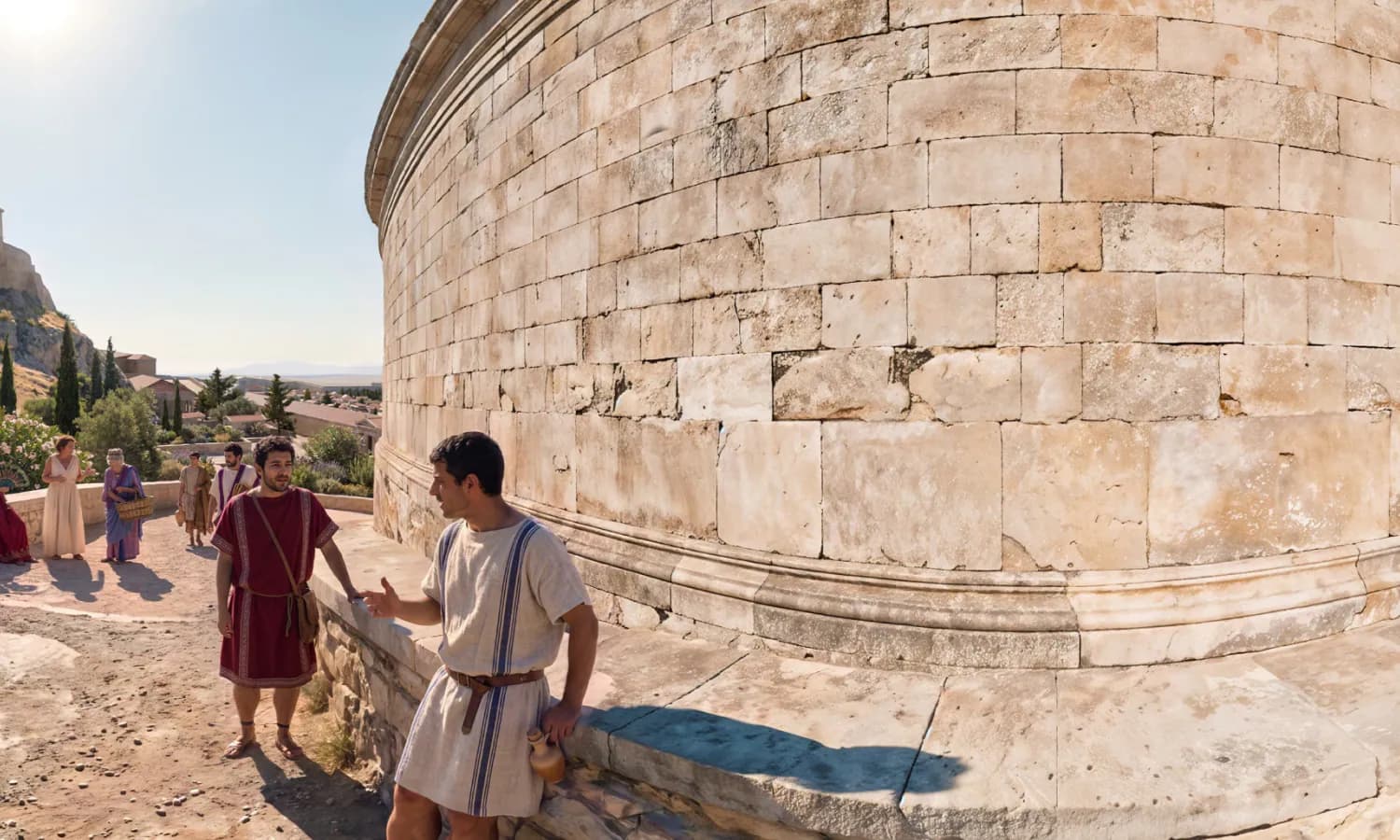
There is a spot on the south slope of the Acropolis, still open to visitors today, where you would once have seen nothing at all. Just a long, curving wall of pale stone. No columns, no sculpture, not a single doorway. Only, if you listened closely, the sound of music escaping, thinned by distance and stone. Our newest TimeSpot puts you exactly there, in the Odeon of Herodes Atticus, shortly after it was completed. Image: TimeLens reconstruction of the blind wall at the top of the Odeon of...
TimeLens impression Hadrian's Library reconstruction

One Rock, Four Sacred Buildings: The Stone Beneath Solomon's Temple

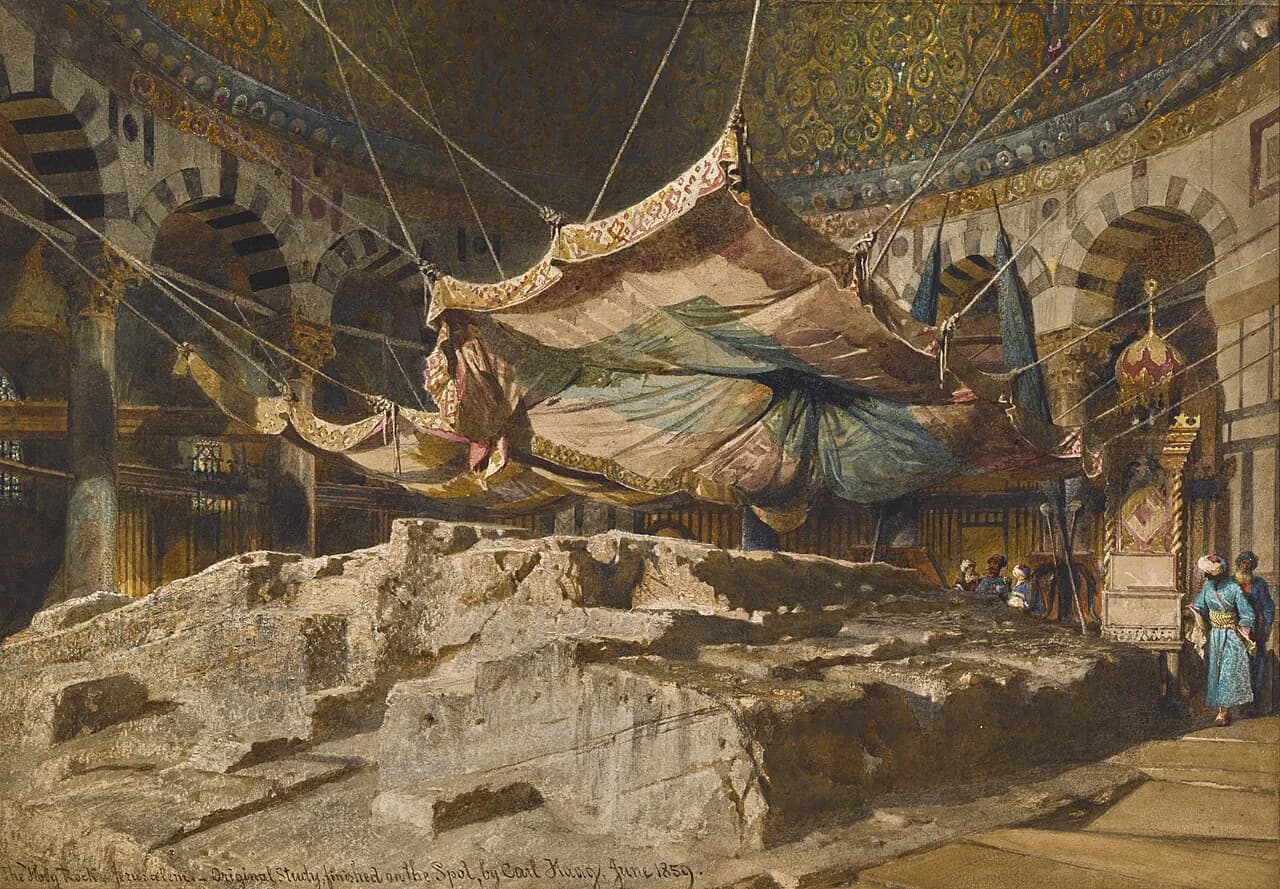
Beneath the most sacred room Solomon ever built lies a single piece of bare rock. It has sat at the centre of this hill for thousands of years, and across roughly three thousand of them, tradition holds that four different sacred buildings have been raised over the very same spot, one after another. Image: 1859 watercolour of the Foundation Stone by Carl Haag The Holy of Holies Inside Solomon's Temple, this rock lay hidden beneath a floor entirely covered in gold, in a room built as a perfect...
TimeLens impression Hadrian's Library reconstruction

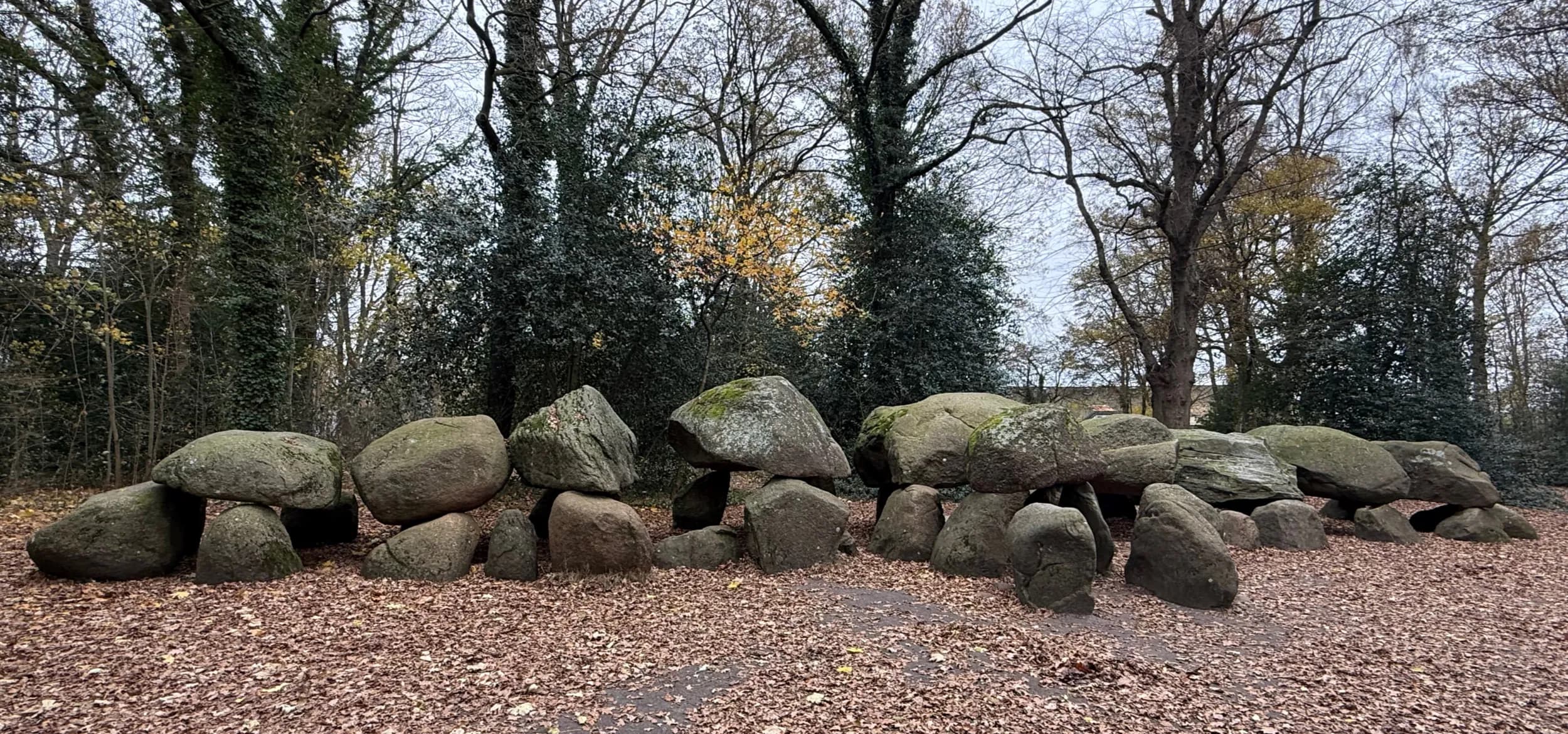
Who Built the Hunebeds?

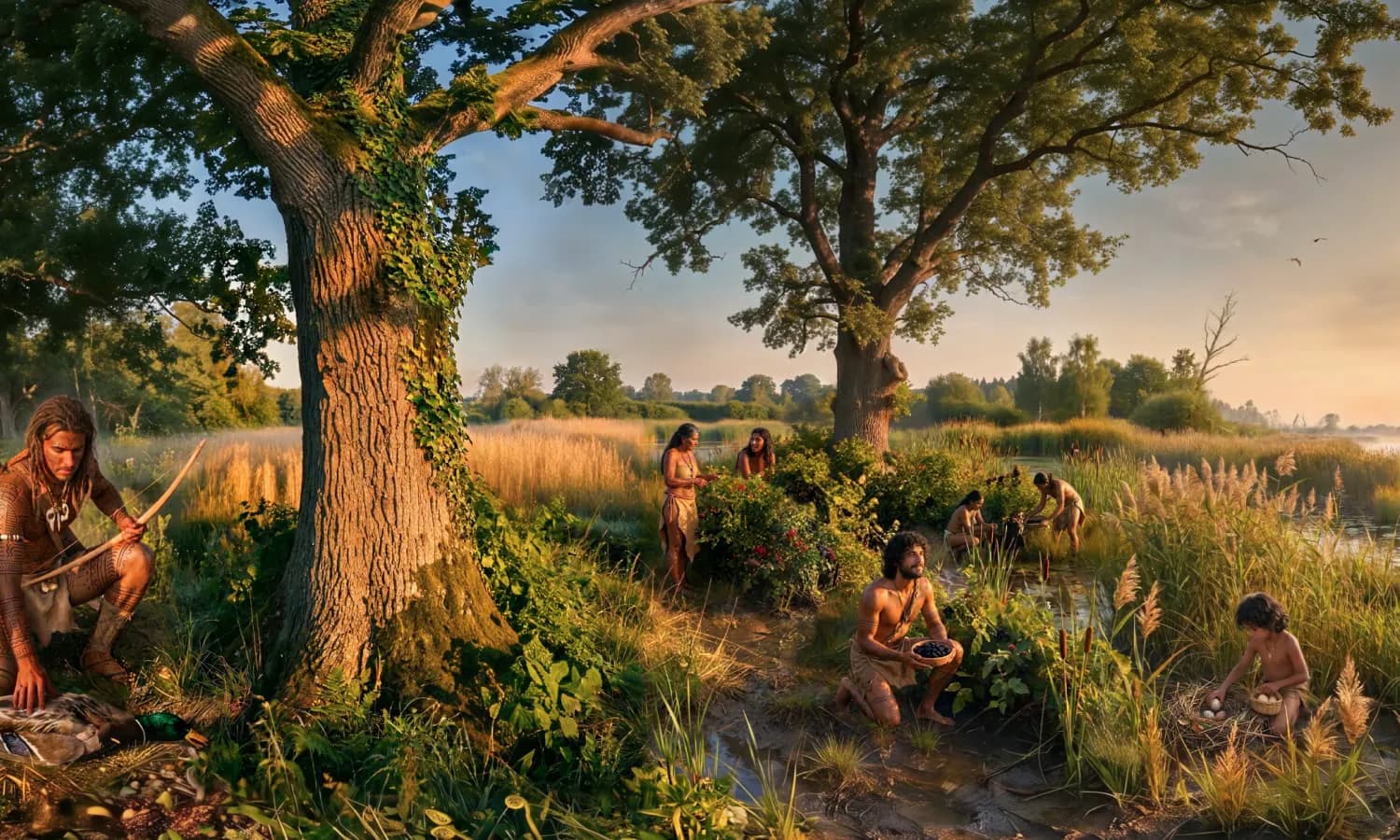
Imagine standing in Drenthe five thousand years ago. Around you lies not empty heath but fields of ripening wheat, timber farmhouses, smoke rising from cooking fires, and children minding the goats. These were the people who built the hunebeds, and they were the first farmers ever to settle in the Netherlands. Image: TimeLens reconstruction of river life near Hunebedcentrum The first farmers of the north Archaeologists call them the Funnel Beaker people, after the funnel shaped pottery they...
TimeLens impression Hadrian's Library reconstruction

The River Comes to Life

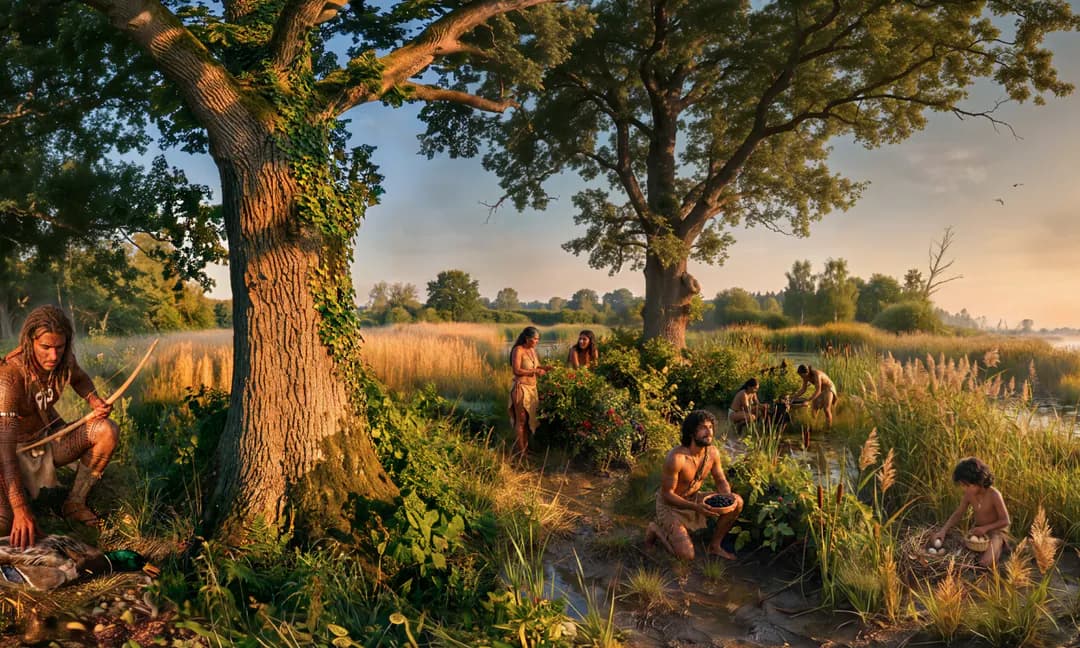
Image: TimeLens reconstruction of the river life near the Hunebedcentrum A while ago we shared our collaboration between Hunebedcentrum and TimeLens. Now the first scene has fully come to life. To see the full scene, you will need to visit the museum next year, but we happily share a sneak peek here. The scene takes you to the river near the prehistoric village, where people combine farming with gathering food from the surrounding landscape. You can see different daily activities unfolding...
TimeLens impression Hadrian's Library reconstruction

The Castello Plan: The Map used to rebuild New Amsterdam

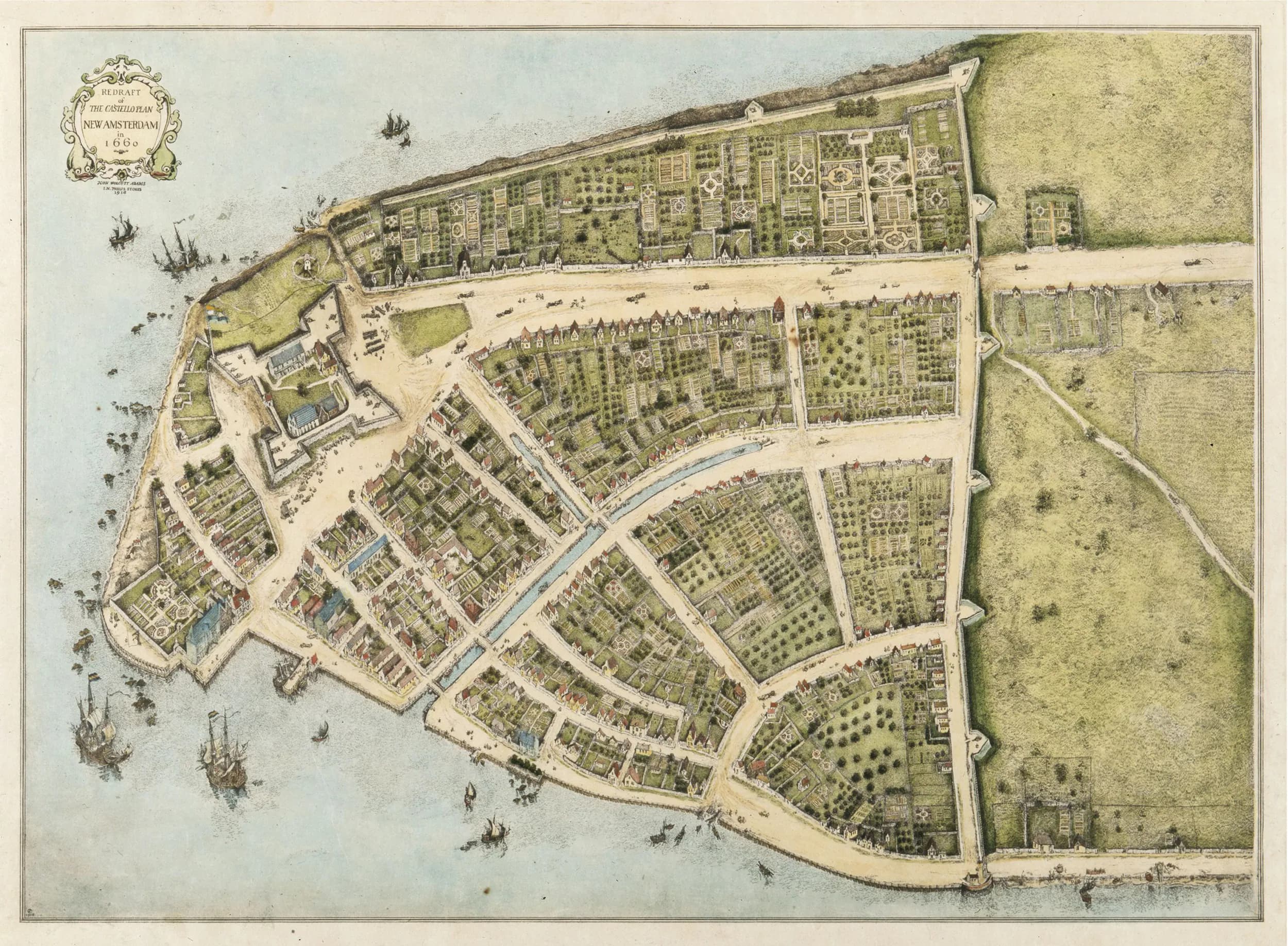
How can anyone know what a city looked like four hundred years ago, when almost every building is gone? For New Amsterdam, the answer is a single remarkable document: a map called the Castello Plan, drawn in 1660. It is the earliest known map of New York City, and it lies at the base of the reconstruction of New Amsterdam that the New Amsterdam History Center created. Image: The original Castello Plan from 1660. A survey of a small Dutch city In June 1660 the surveyor Jacques Cortelyou was...
TimeLens impression Hadrian's Library reconstruction

Jachin and Boaz: The Two Pillars That Held Up Nothing

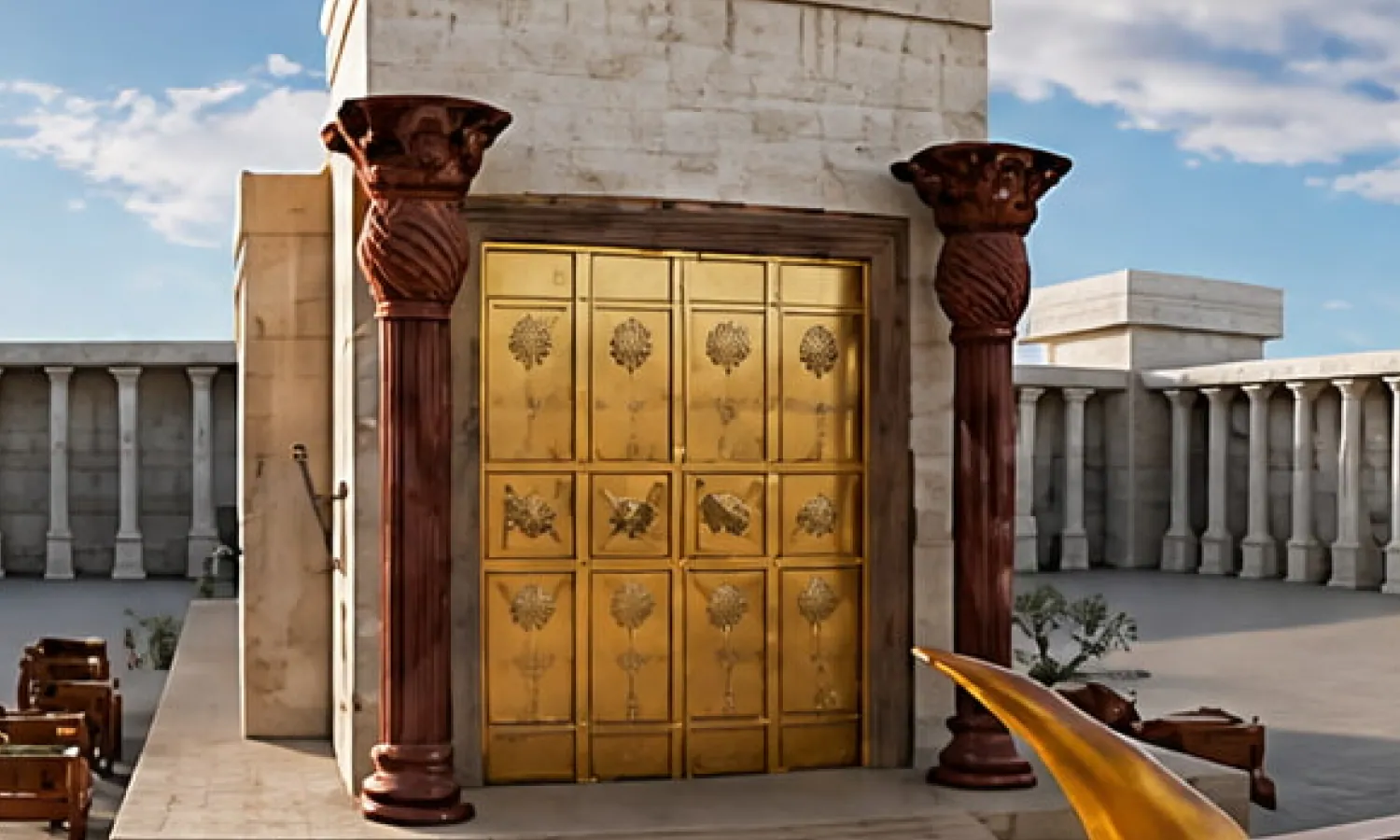
At the entrance to Solomon's Temple stood two enormous bronze pillars, each around nine and a half metres tall, crowned with ornamented capitals rising several metres more. They are named, individually, in the old texts, which is rare for architectural features of this kind. They carried no weight. They held up no roof. And yet they may be the most discussed detail of the entire building. Image: Reconstruction of Jachin and Boaz by Becker Innovations as shown in TimeLens Two names, two...
TimeLens impression Hadrian's Library reconstruction

Why Is Wall Street Called Wall Street?

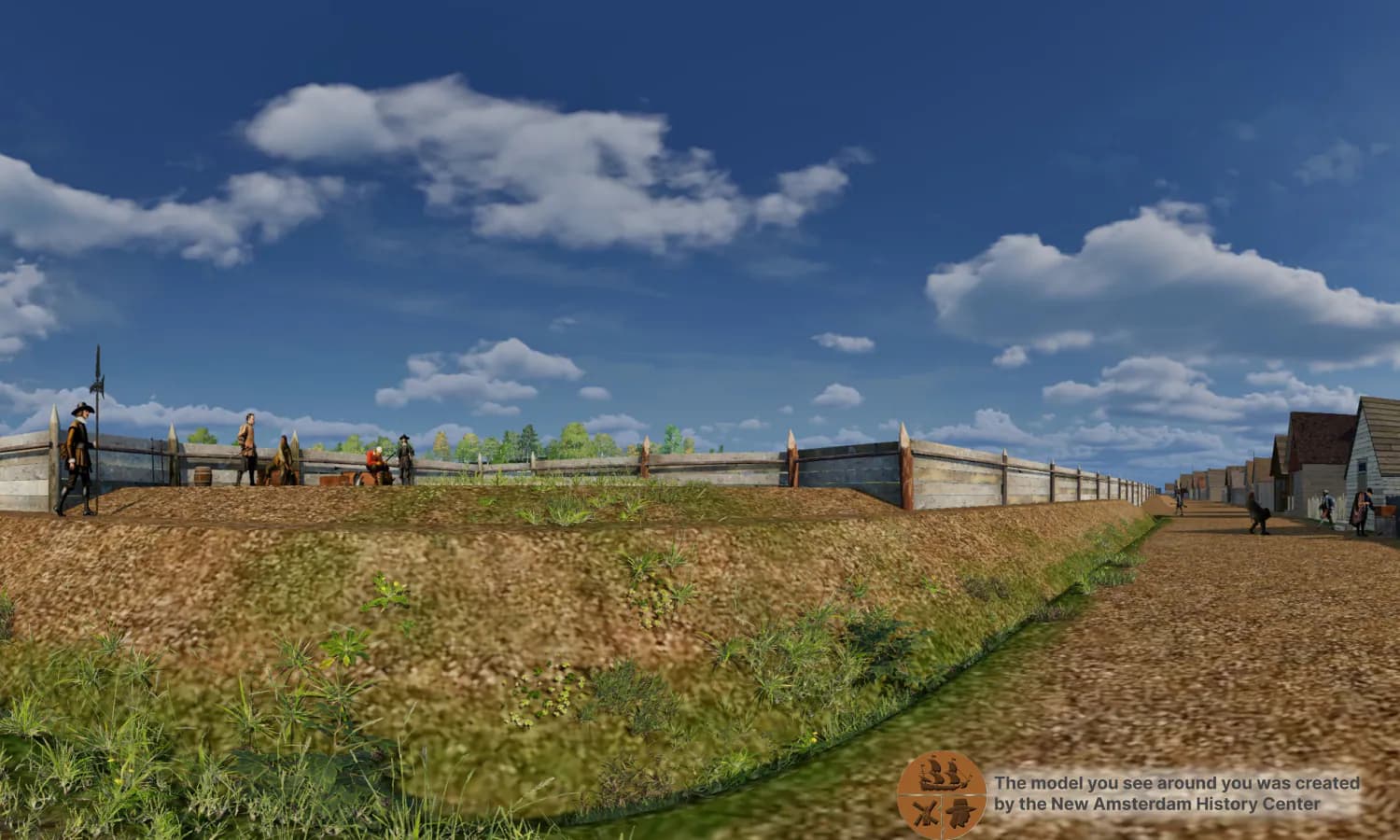
Almost everyone in the world will know Wall Street in NYC, but why does this famous street have this name? Why is Wall Street called Wall Street? This question is rather easy to answer if you imagine standing at the northern edge of New Amsterdam in 1660. In front of you runs a rough barrier of upright planks, marking the very limit of the town. Beyond it lie fields, and a single dirt road heading north into the island. Those two features, the wall and the road beside it, would one day give...
TimeLens impression Hadrian's Library reconstruction

Sara Roelofs: The Woman Who Translated Between Two Worlds

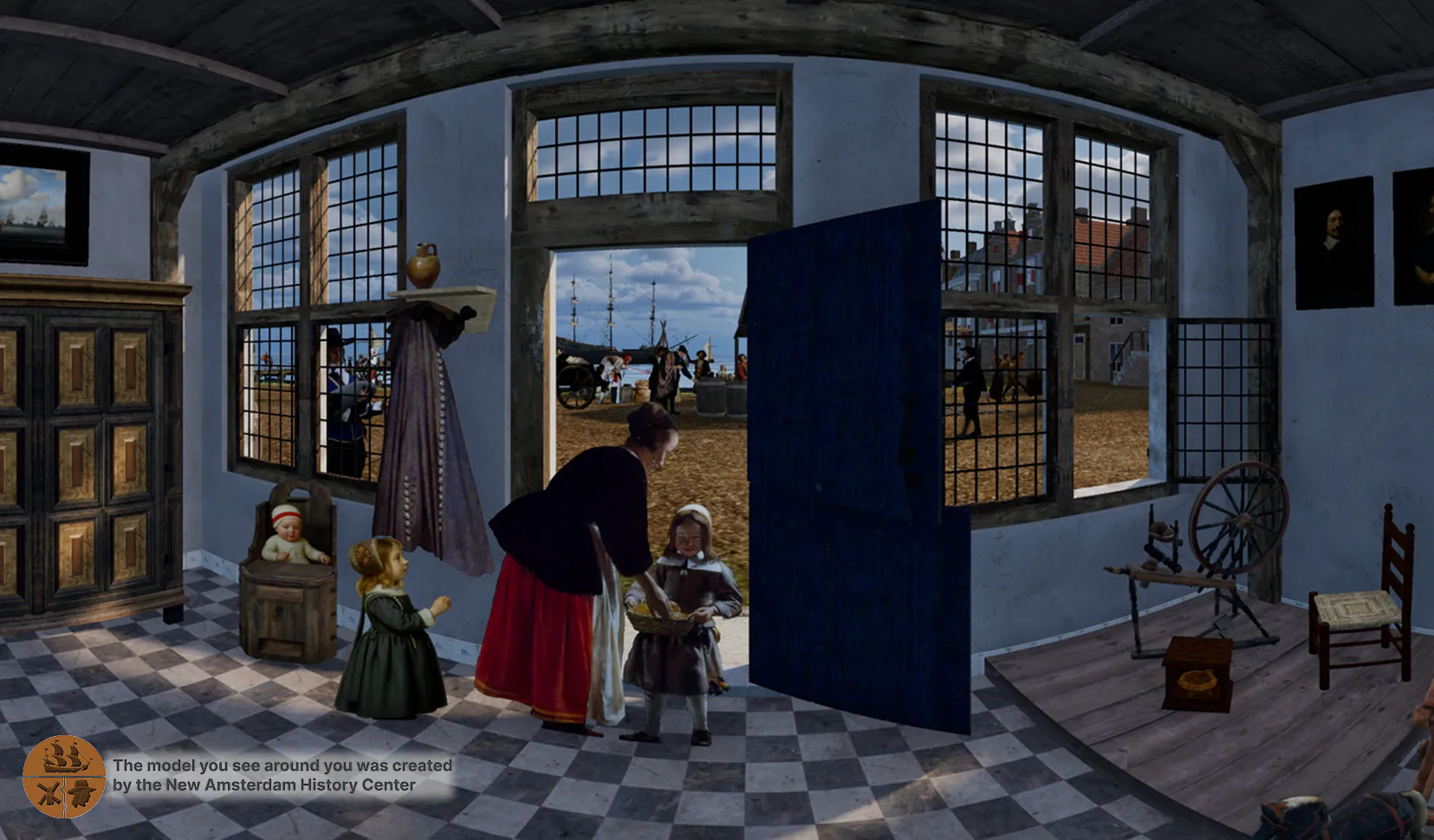
In a colony where a single misunderstanding could tip trade into war, one of the most important people in New Amsterdam was a woman who could speak to both sides. Her name was Sara Roelofs, and from a house near the waterfront she helped hold together the fragile relationship between the Dutch and the Lenape. Image: The front room of Sarah Roelofs' house as reconstructed by the New Amsterdam History Center. From Amsterdam to Manhattan Sara Roelofs was born in Amsterdam in 1627 to Scandinavian...
TimeLens impression Hadrian's Library reconstruction

Inside Solomon's Temple: Reconstructed from Scripture

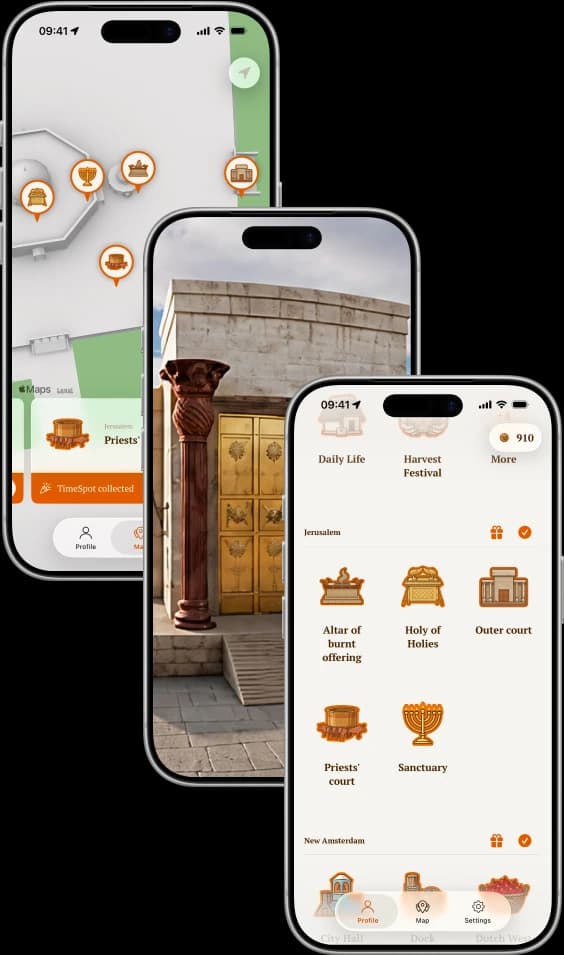
Imagine standing inside Solomon's Temple, the First Temple of Jerusalem, nearly three thousand years ago. Gold covers the walls. The menorah burns, the table of the showbread stands ready, and the golden altar of incense sends its smoke towards the veil of the holiest room of all. This is our newest collaboration, and it is now in the TimeLens app. Image: Screenshots from Solomon's Temple inside the TimeLens app. A reconstruction built from the written word Solomon's Temple, the Beit...
TimeLens impression Hadrian's Library reconstruction

What Did Solomon's Temple Look Like? A Journey Through Its Courts

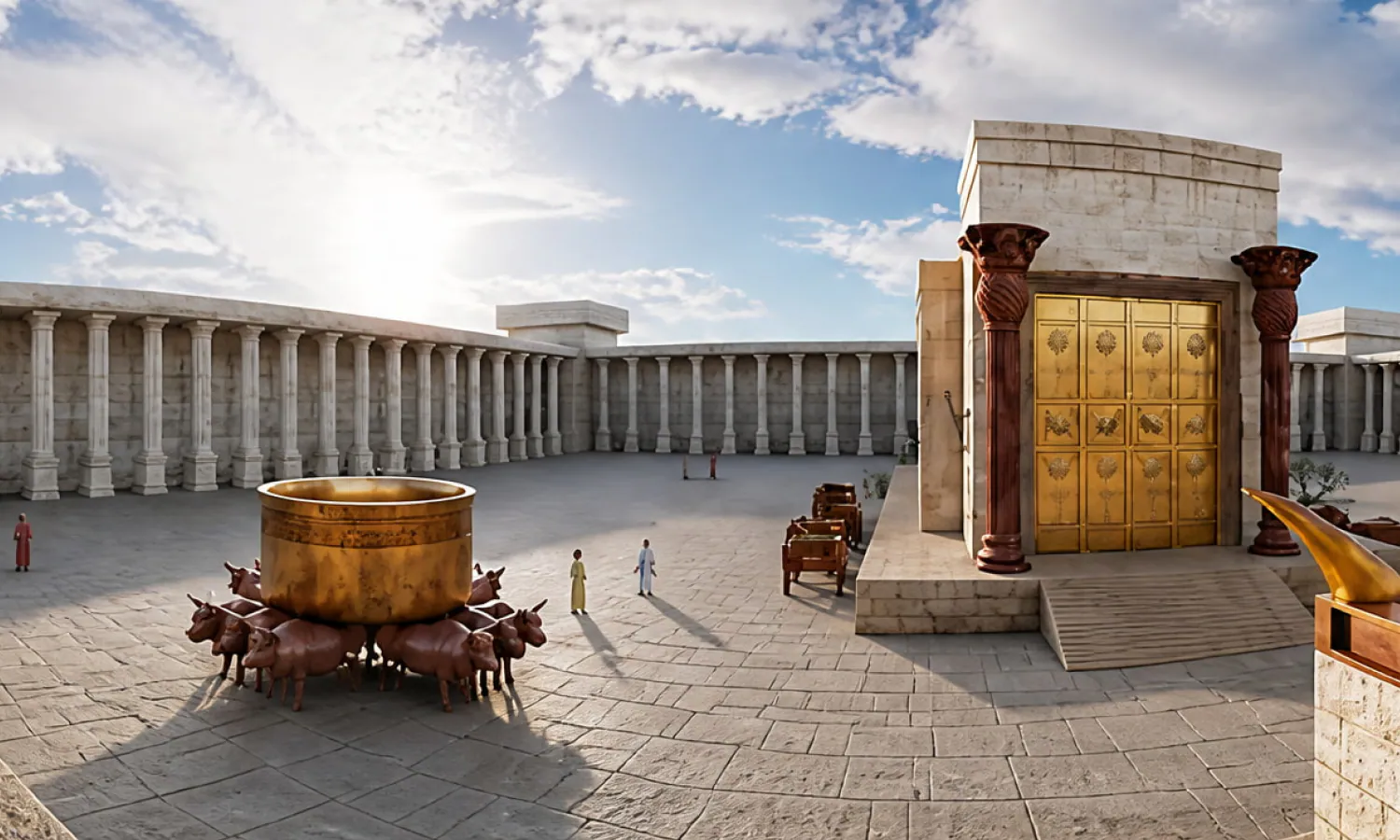
Solomon's Temple was not one room. It was a sequence, ring within ring, each one closer to the sacred than the last, and closed to almost everyone before the very end. Standing at its outer edge, an ordinary person in ancient Jerusalem could see, at most, the start of what lay beyond. Understanding the Temple means understanding exactly how far you were, and were not, allowed to go. Image: Reconstruction of Solomon's Temple by Becker Innovations as shown in TimeLens The outer court: as far as...
TimeLens impression Hadrian's Library reconstruction

The Theatre of Dionysos: Where Medea Took Flight

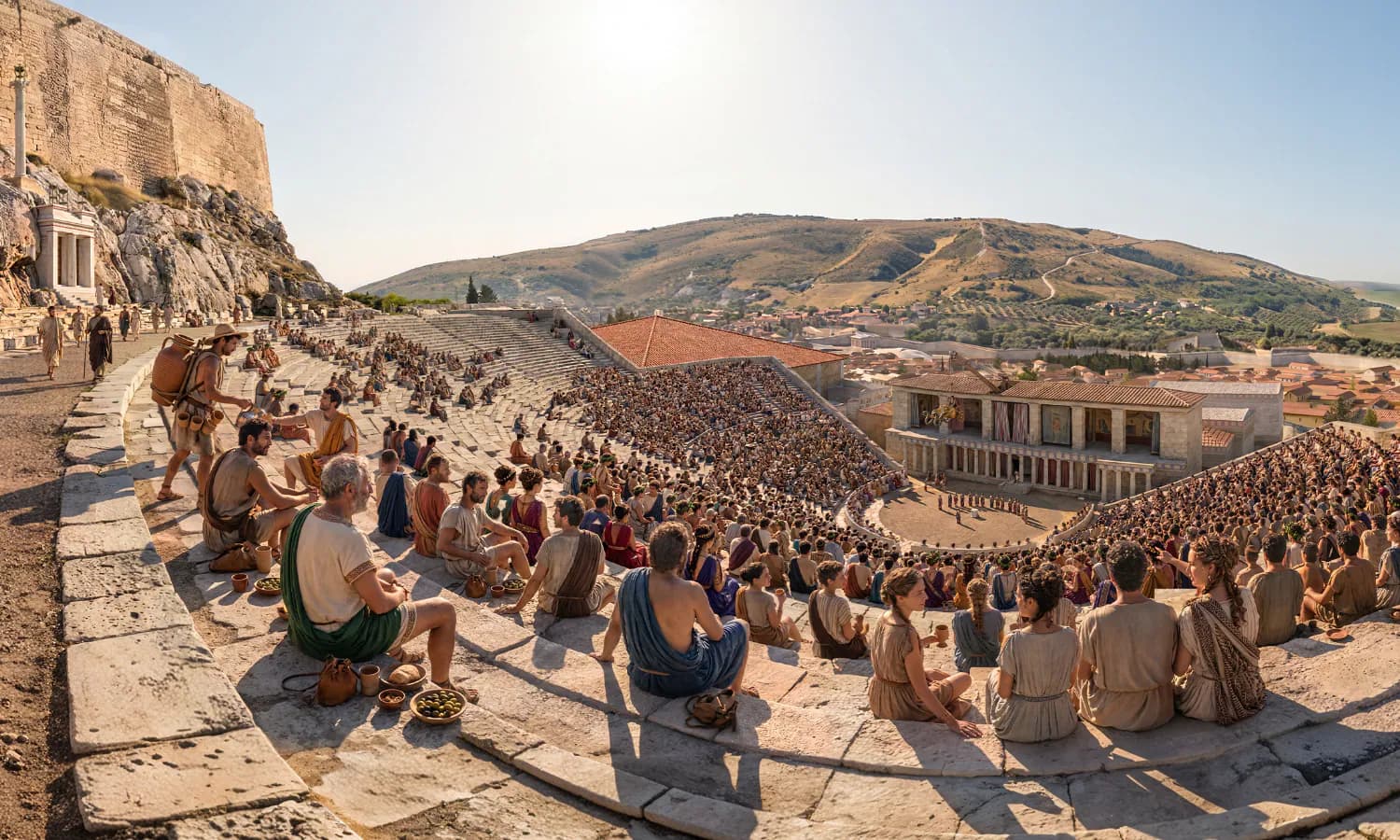
Imagine standing in the Theatre of Dionysos in Athens, around 320 BCE. The stone seats climb the south slope of the Acropolis, packed with spectators. It is a festival of Dionysos, and on the stage below, one of the most famous moments in all of drama is about to unfold. This is our newest TimeSpot, now in production, and it takes you to the very place where theatre as we know it was born. Image: TimeLens reconstruction of the Theater of Dionysos in Athens during Hellenistic times. A festival...
TimeLens impression Hadrian's Library reconstruction

Seeing the hunebedden as they once stood

Bringing the Hunebed Builders Back to Life Across the province of Drenthe stand dozens of hunebeds, giant stone tombs older than the pyramids of Egypt. They are the oldest monuments in the Netherlands. But the people who raised them, the hunebed builders, and the world they lived in, vanished more than five thousand years ago. Today we are proud to announce a project that brings that world back. Together with the Hunebedcentrum in Borger, and with the support of the Cultuurfonds, TimeLens is...
TimeLens impression Hadrian's Library reconstruction

The Acropolis in Ottoman Times: the Day the Marbles Left

Imagine standing on the Acropolis in Ottoman times, in the year 1805 to be specific. It is the very spot where, in our Classical reconstruction, the Panathenaic procession once reached the Parthenon in its painted glory. Two thousand years later, that same ground tells a very different story. This is our newest TimeSpot, and it is now in the TimeLens app. Image: TimeLens reconstructions of the Parthenon in Classical and Ottoman times next to each other. A ruined Parthenon and an Ottoman town...
TimeLens impression Hadrian's Library reconstruction

Was the Erechtheion Really a Harem?

It is one of the most repeated stories about the Acropolis. After the Ottomans took Athens, so the tale goes, they turned the Erechtheion, the elegant temple guarded by the six Caryatids, into a harem for the garrison commander's wives. You will find it in guidebooks, in tour scripts and all over the web. There is just one problem. The evidence for it is remarkably thin. Image: TimeLens reconstruction of the Acropolis in Ottoman times as a Caryatid of the Erechtheion is being wheeled away....
TimeLens impression Hadrian's Library reconstruction

How the Parthenon Was Destroyed: The Explosion of 1687

For more than two thousand years the Parthenon stood almost intact. It had survived as a temple, a church and a mosque, keeping its roof, its walls and nearly all its columns through war, fire and one empire after another. But today we see only a ruin, so how was the Parthenon destroyed? A city caught in a long war The Ottomans and the Venetian Republic spent much of the seventeenth century at war. In 1687, as part of the conflict known as the Morean War, a Venetian army under Francesco...
TimeLens impression Hadrian's Library reconstruction

When the Parthenon Was a Mosque

Image: TimeLens reconstruction of the Ottoman mosque inside the Parthenon. Imagine standing on the Acropolis three hundred years ago. The Parthenon rises ahead of you much as it always has, but a slender minaret climbs from its southwest corner, and the call to prayer drifts out across the rooftops of a small Ottoman town. For roughly two centuries this was the everyday Parthenon. Not a ruin, not a museum, but a working mosque at the heart of a living city. The idea that there was a mosque...
TimeLens impression Hadrian's Library reconstruction

The Acropolis in Roman Times: A Moment of Cultural Fusion

We've just completed our next panorama in TimeLens: the Acropolis as it appeared during the Roman period, with the Temple of Rome and Augustus standing proudly alongside the Parthenon. Image: Impression of the TimeLens reconstruction of the Temple of Roman and Augustus on the Acropolis This is a fascinating moment in history to reconstruct. Rome has taken political control of Athens, yet something remarkable has happened. Greek religion and culture remain vibrant, alive, and deeply woven into...
TimeLens impression Hadrian's Library reconstruction

What Did New York Look Like in 1660? Bringing New Amsterdam Back to Life

See 17th century New Amsterdam restored in TimeLens. Our partnership with the New Amsterdam History Center brings Dutch Manhattan back to life this July.
TimeLens impression Hadrian's Library reconstruction

The Panathenaic Procession, Explained Through the Parthenon Frieze

Imagine the whole of Athens in motion: horsemen and chariots, musicians, elders and young women, all making their way up to the Acropolis to honour the goddess Athena. This was the Panathenaic procession, the high point of the city's greatest festival, and it was carved in marble around the Parthenon itself. The festival that united a city Every four years, from 566 BC onward, Athens held the Great Panathenaia, a grand celebration of Athena's birthday and of the city she protected. At its...
TimeLens impression Hadrian's Library reconstruction

Reconstructing ancient Athens

As we are working on the fourth TimeSpot in Athens, we want to share more about our full plans for Athens. It is one of the most important historic cities in the world, yet so much of it has become difficult to imagine. Temples stand as fragments, entire neighbourhoods have disappeared, and many of the stories that once filled these places are invisible to the modern visitor. That is exactly what we want to change and that is why it is the starting point of TimeLens. Image: A part of the...
bottom of page