The Aula Regia: Standing in Domitian's Throne Room
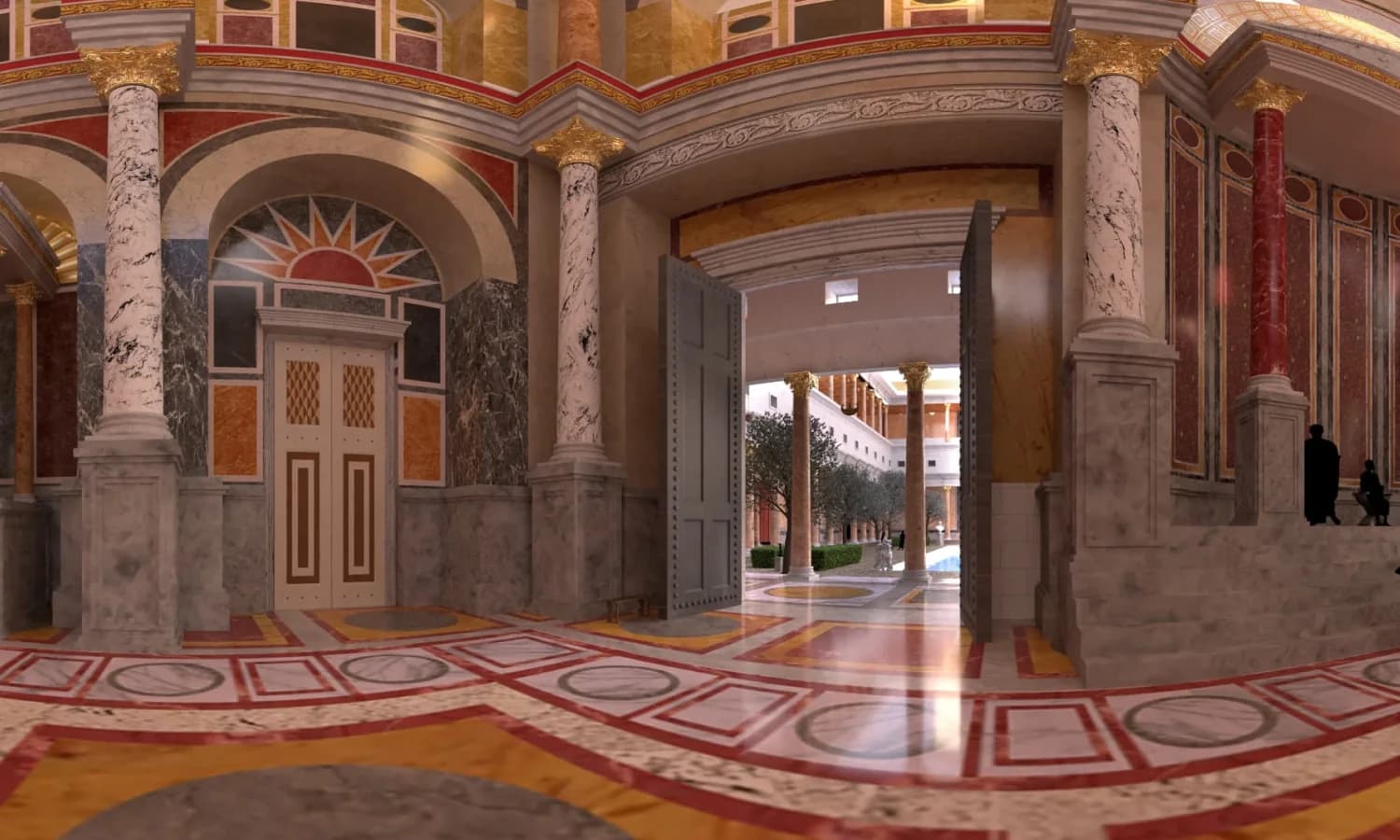
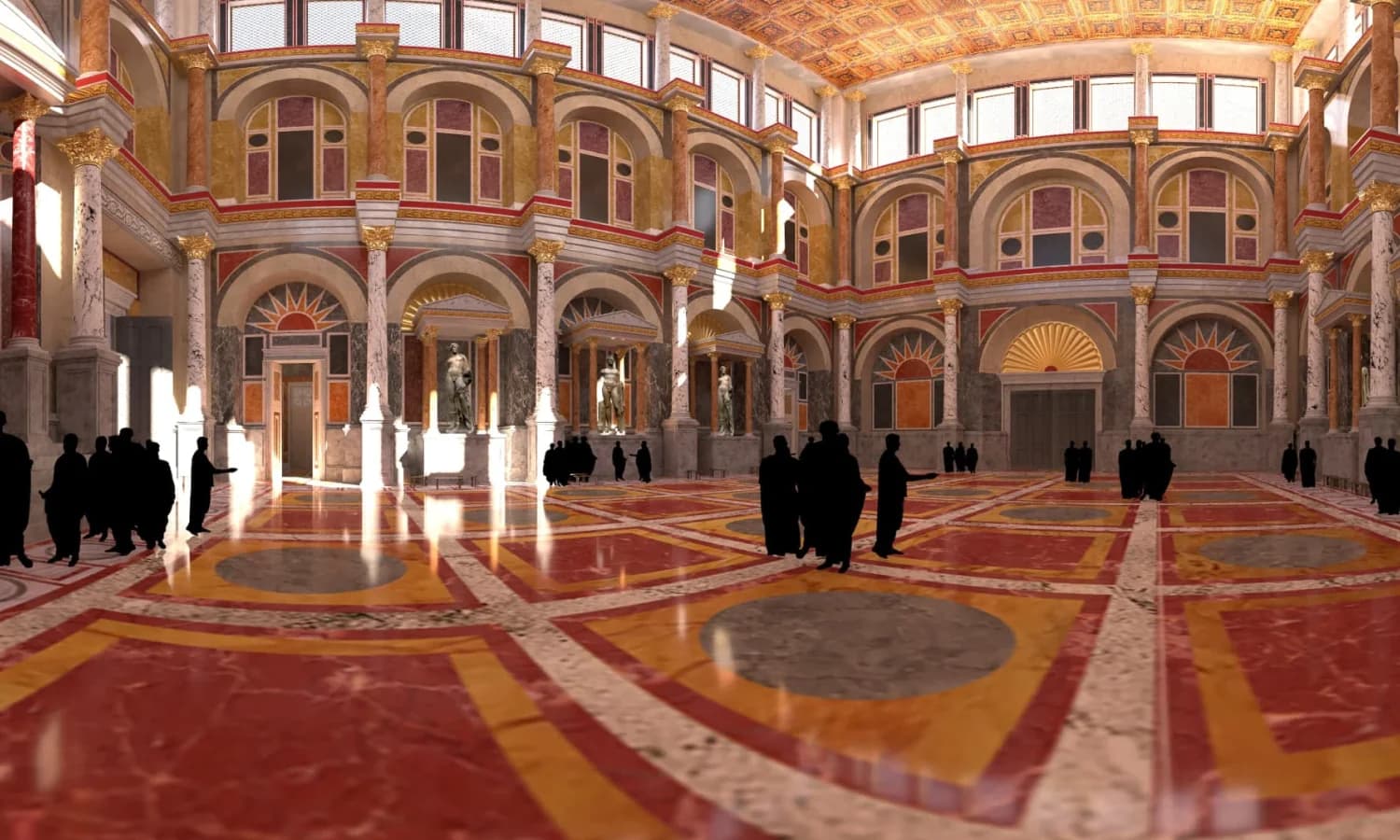
Of all the rooms in Domitian's Palace, none was built to impress quite like the Aula Regia, the royal hall and Domitian's throne room. TimeLens's 360° reconstruction places you inside it, at about 30 by 40 metres, with two storeys of arched openings and galleries climbing the walls and a band of windows above them, letting daylight fall in long shafts across the floor. Over it all spreads a ceiling of wooden coffers, every panel gilded.
A Hall of Gods and Giants
Set into niches along the walls stood colossal statues, roughly twice the height of a person: gods and heroes in the emperor's company. Two of them are known to us by name. Between 1724 and 1726, Francesco Farnese, Duke of Parma, sponsored excavations on the Palatine, and his diggers uncovered two of these giant figures, Bacchus and Hercules. The duke had them carried off to decorate his own palace, the Pilotta, in Parma, where they remain today in the city's national archaeological museum, far from the niches built for them.
An Audience with the Emperor
The Aula Regia was where Domitian received ambassadors and granted audiences. TimeLens shows the hall filled with the people who once used it: men in togas standing in small groups, envoys and petitioners waiting their turn to be heard.
At the far end of the hall, the wall curves back into an apse where the emperor's throne stood. The approach to it was designed to be felt as much as seen. A visitor crossed a floor of great red panels and dark grey discs polished until it shone, passing columns and colossal statues beneath gilded coffers, towards a single seated figure at the end. By the time a petitioner reached him, the room had already made its point.
Many of the columns are pavonazzetto, a white marble veined with dark purple, brought from Phrygia in what is now Türkiye. Above the doorways, sunburst patterns spread their rays in half circles, and where the tall bronze doors stand open onto the courtyard, the garden and its fountain appear framed between them, one more carefully planned view through the palace.
The Man on the Throne
Domitian's building projects reached far beyond this hill. Across Rome he restored more than 50 buildings, rebuilt the great temple of Jupiter on the Capitoline, and raised a temple to his own family on the site of his childhood home. Ancient writers say he wished to be addressed as lord and god while he still lived. He did not keep the throne for long. In the year 96, only a few years after the palace was finished, he was murdered in his private rooms in a plot that reached into his own household.
See the reconstruction of the Aula Regia in the TimeLens app, and compare it with the Cenatio Iovis, the emperor's dining hall nearby. For more on the excavation of the Farnese Hercules and Bacchus, see the Complesso Monumentale della Pilotta, which now holds them.