Ancient Air Conditioning: The Roman Fountain Rooms of the Palatine
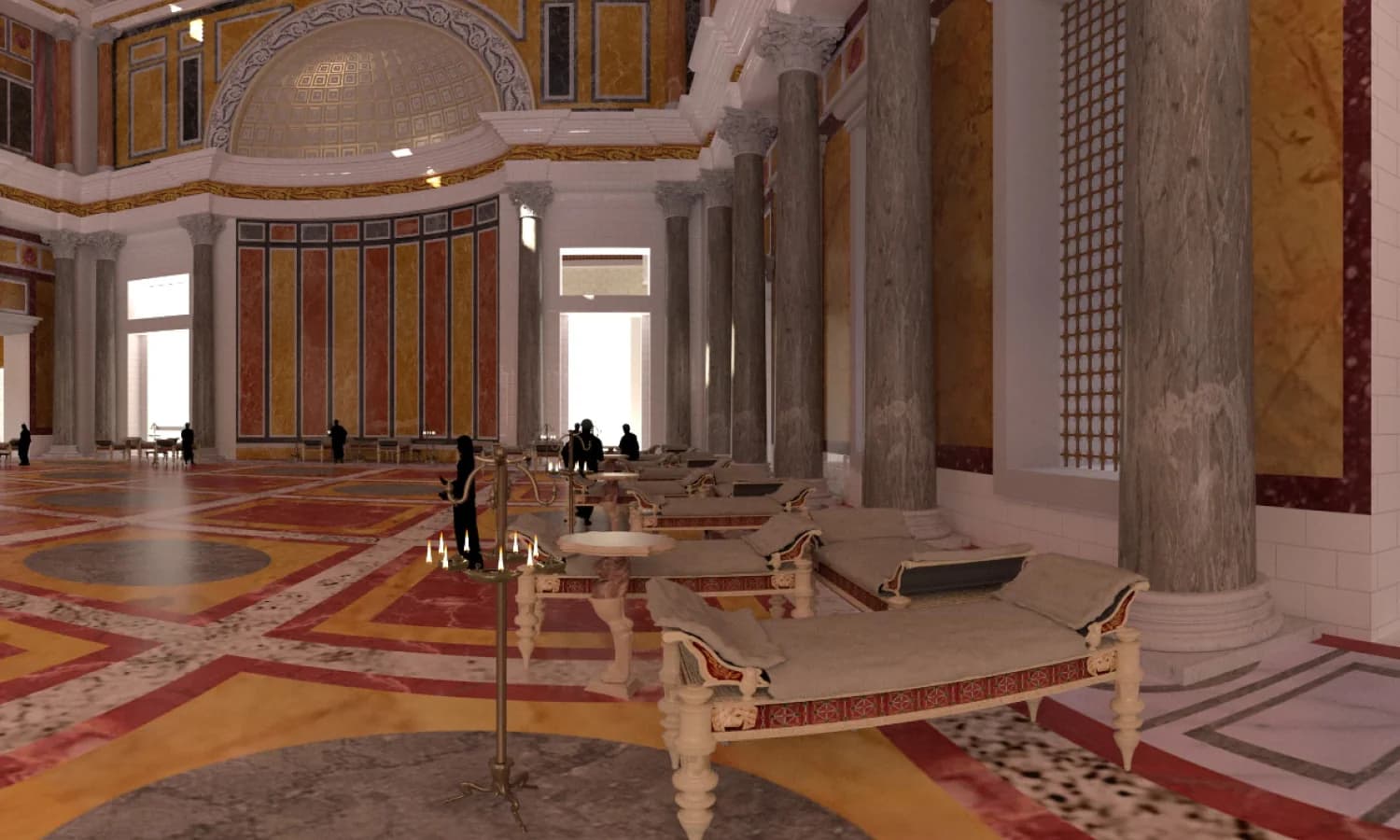
Beside the great dining hall of Domitian's Palace stand a pair of Roman fountain rooms, and TimeLens's reconstruction shows what they were for. These rooms exist for the hall next door: they are what made the emperor's long, crowded banquets bearable in a Roman summer.
Water Instead of Machines
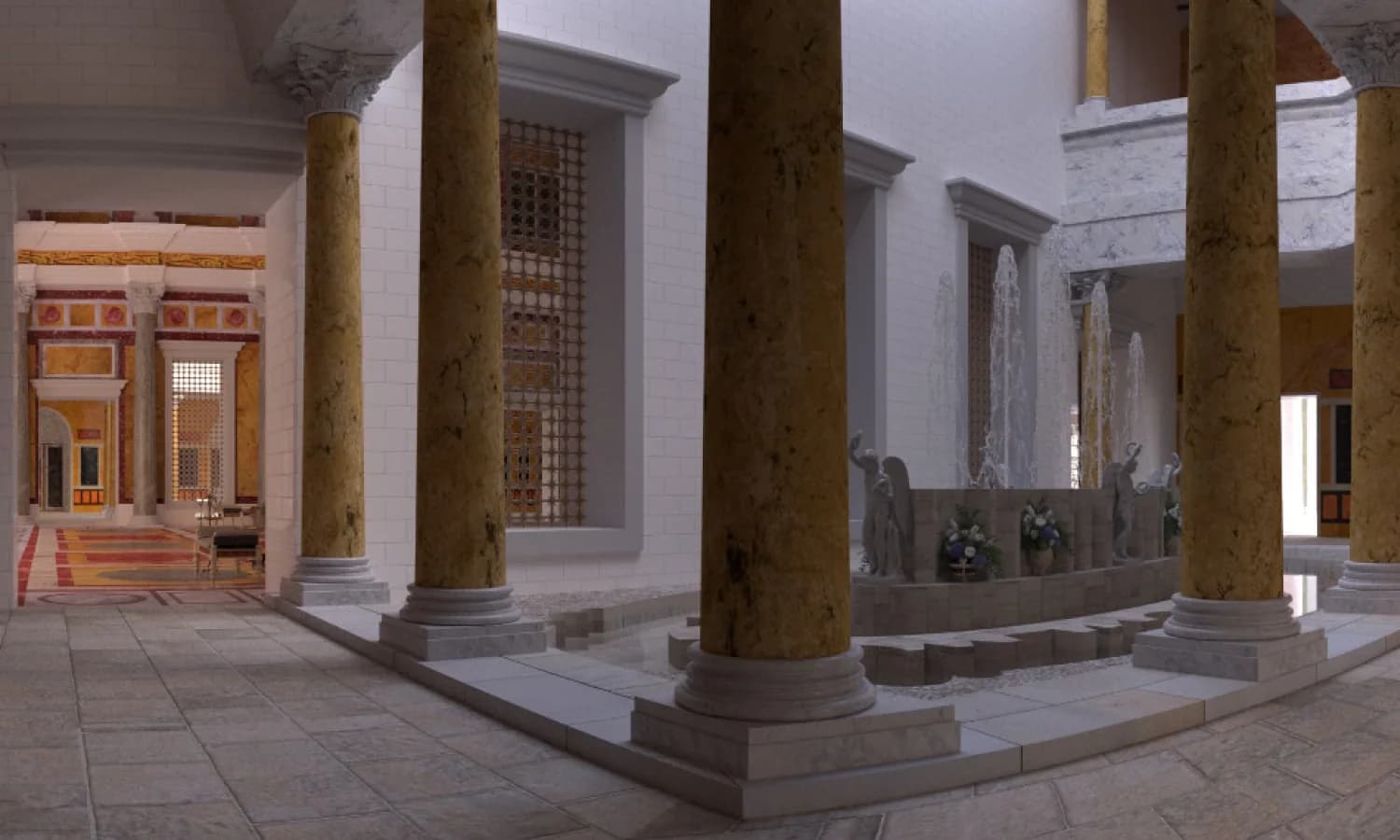
A ring of golden yellow columns surrounds each fountain, and above it the building opens to let fresh air and daylight pour straight down onto the water. Several jets rise and fall around sculpted figures. There are no machines moving the air here, only water, stone, shade and a clever design. The moving water cools the surrounding air, and openings between the fountain rooms and the Cenatio Iovis let that cooler air drift through to the diners next door: an ancient form of air conditioning.
It took more than good physics to make it work. The fountains here, the fountains in the courtyard, the water shows in the garden pool and much else in the palace all depended on a constant supply of fresh water, not an easy thing to arrange on a hilltop. To keep the palace supplied, Roman engineers built a special extension of the Aqua Claudia, one of the city's great aqueducts.
A Room for the Ears as Much as the Eyes
In a rounded niche, a small cage hangs on a long chain with a bird inside it. Add its song to the splash of the fountain and the room becomes as much a listening experience as a visual one. Underfoot, plain stone slabs replace the patterned marble of the dining hall next door, though the walls still carry colour: glossy black panels set into golden yellow, with bands of red above and orange below.
It is easy to picture a guest slipping out here between courses, away from the heat, the noise and the watchful eye of the emperor, to stand for a moment by the water.
A Retreat Fit for an Emperor, and Later, Popes
Domitian understood the value of a cool retreat well beyond this room. In the hills near Castel Gandolfo and Albano, outside Rome, he kept a second palace of his own. Some 15 centuries later, those same hills became the summer retreat of the popes, chosen for much the same reason: cool air above the heat of the city.
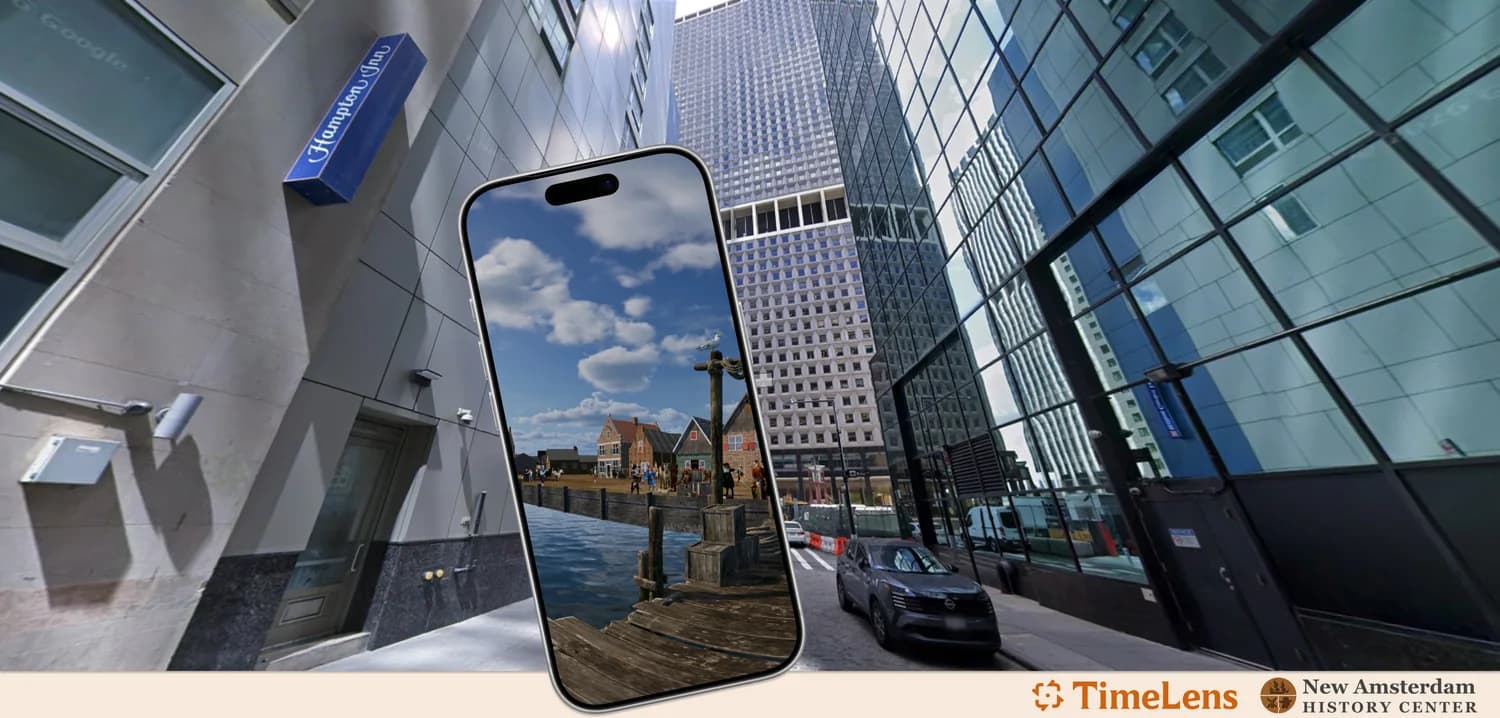
See the fountain rooms in the TimeLens app alongside the dining hall they served, and read more about how the aqueduct brought water to the palace in this study of the Palatine's water supply.