Who Built the Hunebeds?
Imagine standing in Drenthe five thousand years ago. Around you lies not empty heath but fields of ripening wheat, timber farmhouses, smoke rising from cooking fires, and children minding the goats. These were the people who built the hunebeds, and they were the first farmers ever to settle in the Netherlands.
The first farmers of the north
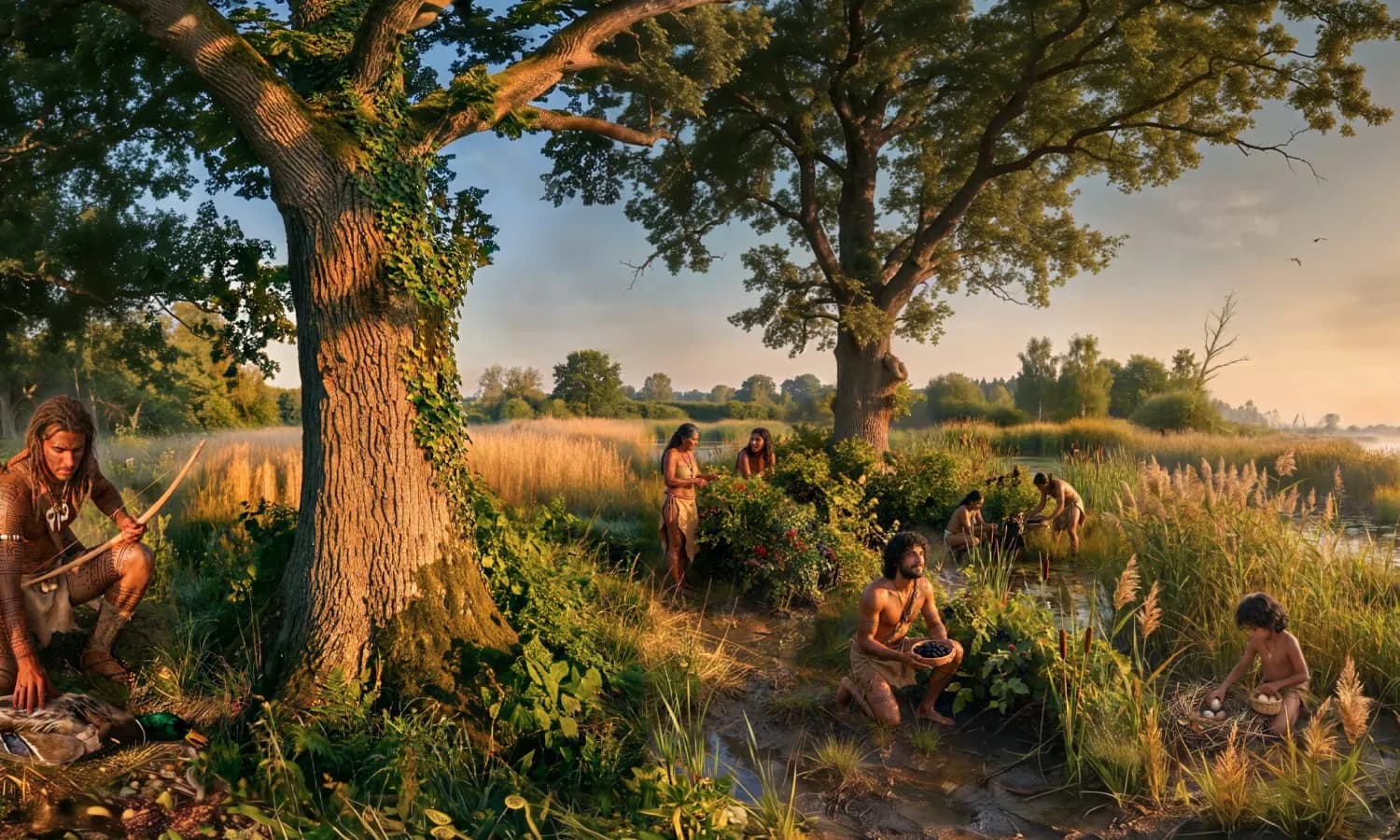
Archaeologists call them the Funnel Beaker people, after the funnel shaped pottery they made. They reached this part of the Netherlands around 3400 BC and settled on the higher, sandy ground of the Hondsrug, above the surrounding swamps. They were farmers above all, growing wheat, flax and poppy, keeping cattle, sheep, goats and pigs, and still gathering wild nuts, berries and fish from the land and rivers around them. They worked leather, wood and flint, wove baskets, made pottery, and polished fine stone axes.
A life lived close to the land
Their year turned with the seasons. In spring they tilled and sowed the fields, in late summer and autumn they brought in the harvest and gave thanks, and through the cold winter the whole family, several generations together, sheltered indoors, repairing tools and clothes, cooking, and sharing stories around a smoky fire. It was a life of shared work and close community, where even small children learned by helping with the daily tasks.
Why they raised giants of stone
These same farming communities built the hunebeds as tombs, most likely for their more important members. Over the centuries dozens of people were laid to rest in a single tomb, along with pottery and other goods. Yet a hunebed was never only a grave. Raising such enormous monuments together bound a community in shared identity and belief, and much about the rituals once held at them remains a genuine mystery. We tell that story without inventing it.
Meet them in TimeLens
The best way to understand the hunebed builders is to stand among them. At the Hunebedcentrum, TimeLens places you in their world as it was five thousand years ago, from daily life around the farmhouse to the harvest feast and the gathering at the tomb. To learn how they raised such vast stones, and to see the largest hunebed of all, read on. These reconstructions are created with the Hunebedcentrum, the national home of hunebed research in Borger.