The Acropolis in Ottoman Times: the Day the Marbles Left
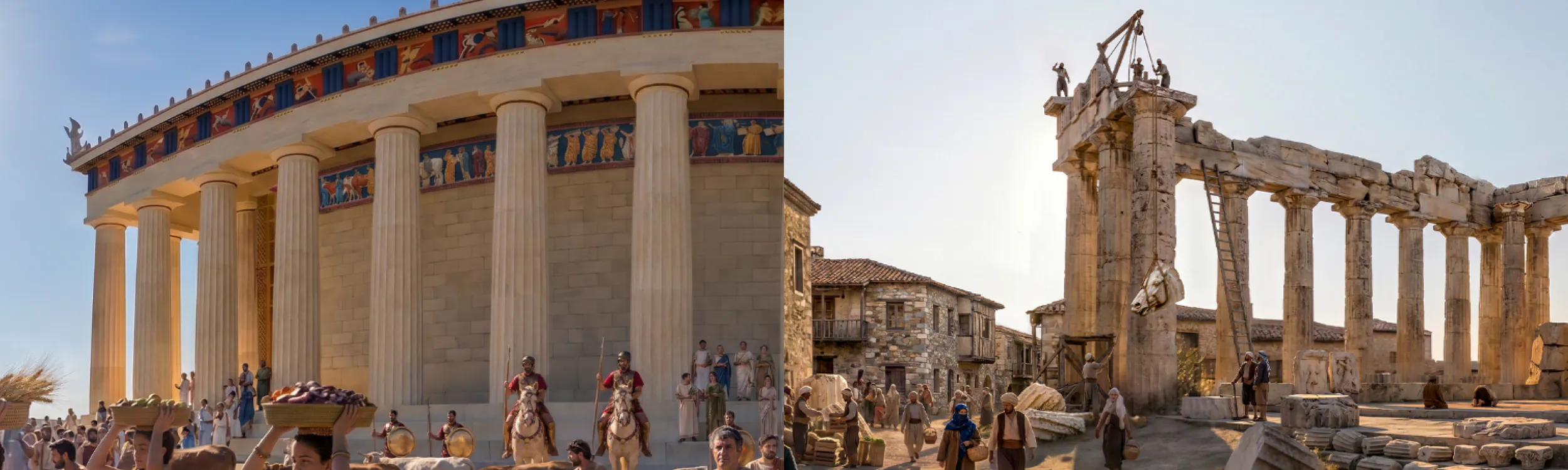
Imagine standing on the Acropolis in Ottoman times, in the year 1805 to be specific. It is the very spot where, in our Classical reconstruction, the Panathenaic procession once reached the Parthenon in its painted glory. Two thousand years later, that same ground tells a very different story. This is our newest TimeSpot, and it is now in the TimeLens app.
A ruined Parthenon and an Ottoman town
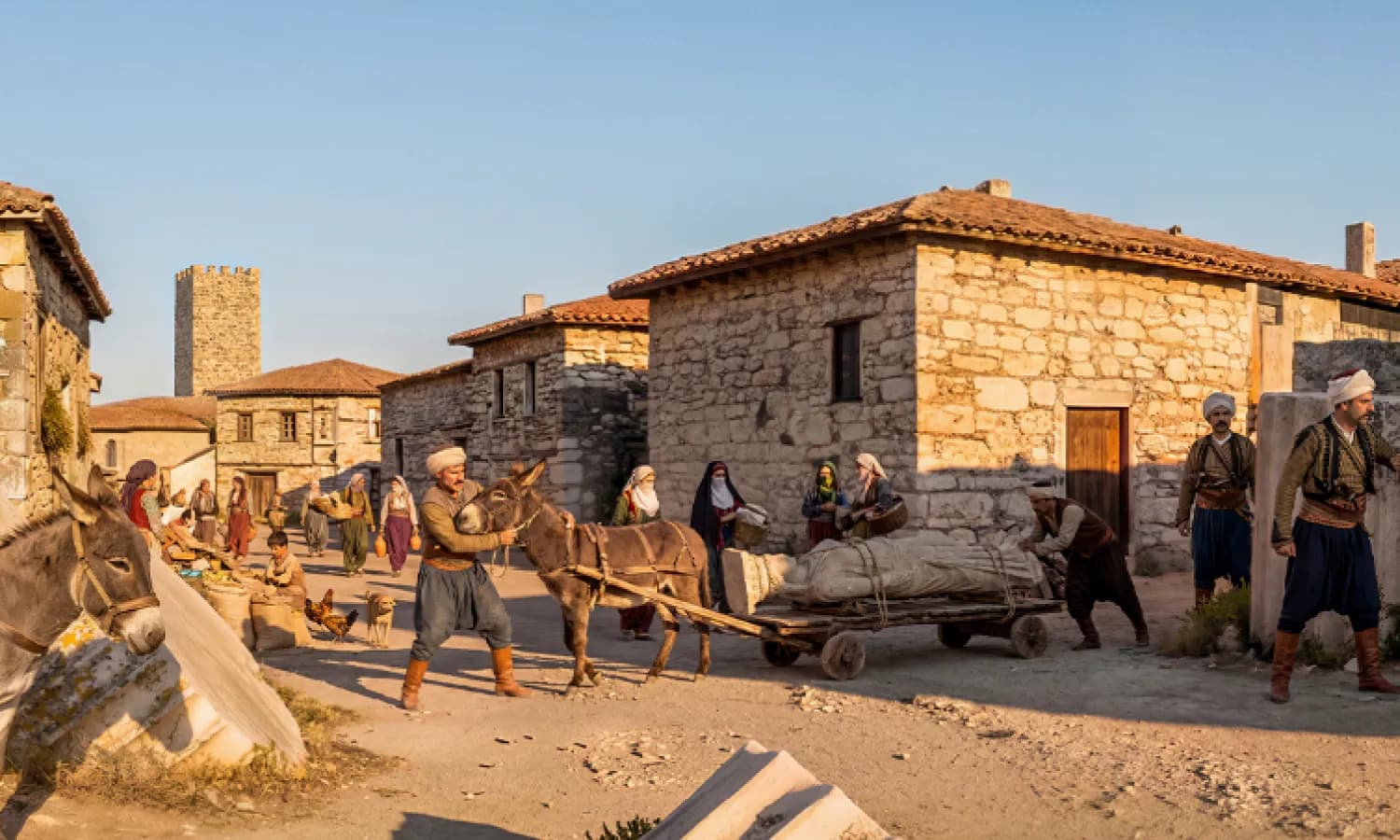
The Parthenon before you stands close to the ruin we know today, and there is a precise reason why. In 1687, during a Venetian siege, the Ottoman garrison was storing gunpowder inside the temple. A single mortar shell found its mark, and the explosion tore the building apart, ending more than two thousand years in which it had stood largely intact. By 1805, the Acropolis is no longer a monument set apart. It is a living town. Houses and outbuildings cover the rock, a small mosque stands within the broken shell of the Parthenon, and the medieval Frankish Tower rises over the entrance. People live, work and worship here, among the ruins.
The moment the Marbles were removed
Look towards the Parthenon and you see the scene that defines this TimeSpot. A crane lowers a sculpture from the ruined temple: the head of one of the horses that drew the chariot of the moon goddess Selene, from the east pediment. Nearby, an agent working for Lord Elgin directs the work, with carved slabs of the frieze and metopes set out on the ground beside him. Elsewhere, a caryatid, one of the marble maidens from the porch of the Erechtheion, is wheeled away, her feet still turned towards the temple she had supported for more than two thousand years.
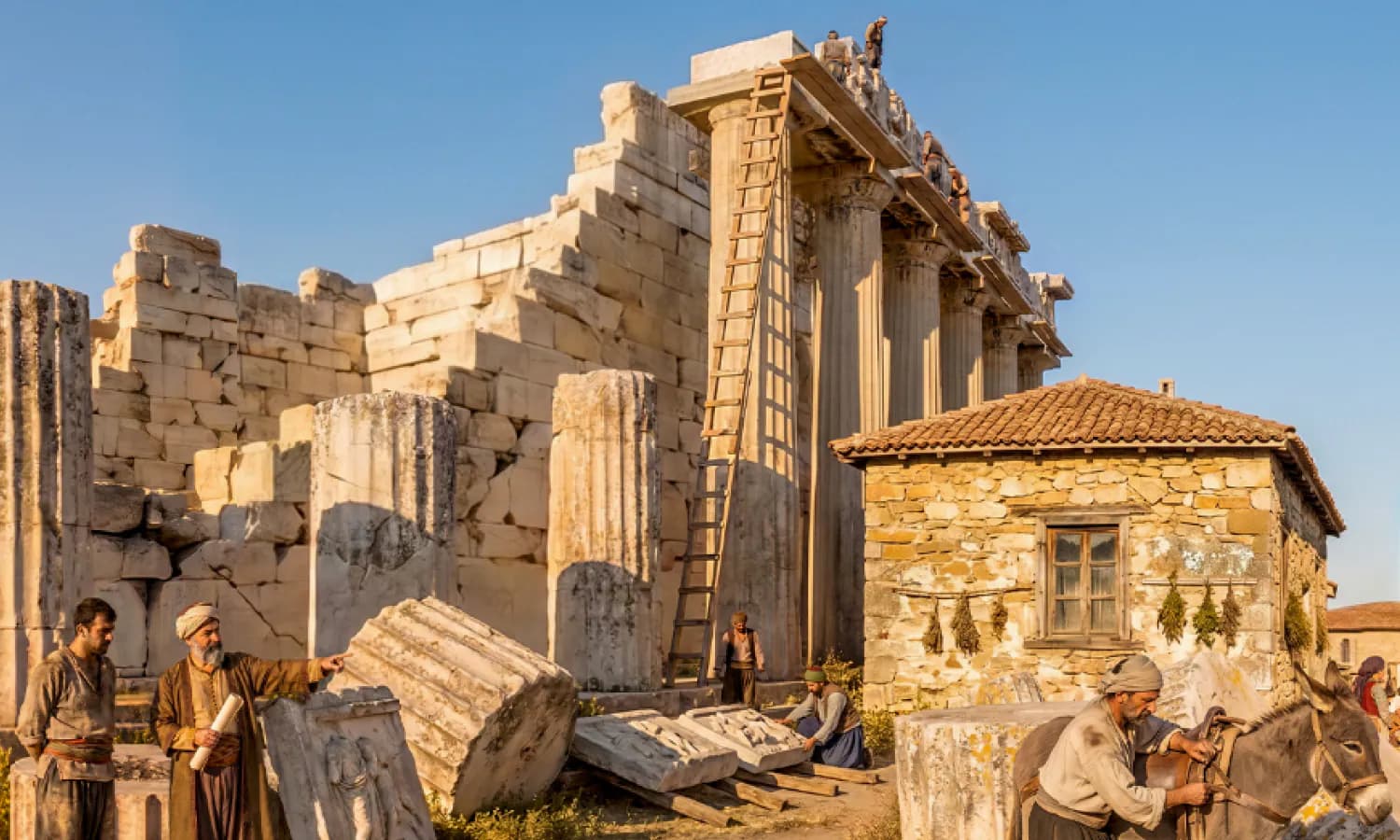
Between 1801 and 1805, Lord Elgin, then British Ambassador to the Ottoman Empire, had his agents remove about half of the surviving sculptures of the Parthenon, along with a caryatid from the Erechtheion and pieces from other buildings on the Acropolis. The work in Athens was overseen by the painter Giovanni Battista Lusieri. In all, roughly fifteen metopes, seventy five metres of the frieze and seventeen figures from the pediments were taken to Britain, where they remain in the British Museum today.
A debate that has never settled
Even at the time, the removals divided opinion. The poet Lord Byron condemned them in print, while others argued they were an act of rescue. Two centuries on, the question is no less alive. Greece seeks the reunification of the sculptures at the Acropolis Museum, which was built with space reserved for them, while the British Museum maintains that they were lawfully acquired and that British law prevents their permanent return. The matter was raised again at UNESCO in 2026. We have not tried to settle that argument here. Our aim was to show the moment as faithfully as the historical record allows, and to let you see it for yourself. Because whether you believe they were stolen or lawfully taken, it was a historic moment.
Grounded in research
As with all our Athens reconstructions, this TimeSpot rests on an architectural model by Dimitris Tsalkanis, with the support of Professor Chrysanthos Kanellopoulos. For this scene, early nineteenth century drawings, prints and travellers' accounts were essential, letting us place the buildings, the mosque and the removal itself with confidence. It joins our growing reconstruction of the Acropolis, alongside the Classical Acropolis and the Roman period, all seen from the same spot.
See it for yourself
The Acropolis in Ottoman times is in the TimeLens app now, on both iOS and Android. Stand where the Panathenaic procession once passed, and witness the same ground in 1805, as a defining moment in the story of the Parthenon unfolds around you.
We build these reconstructions together with museums, historians and supporters who believe the past deserves to be seen again. If you would like to help us reconstruct more of it, you can support us on Patreon. And if you represent a museum or heritage site, we would love to hear from you (drop us an email at hello@timelens.eu).