The Acropolis in Roman Times: A Moment of Cultural Fusion
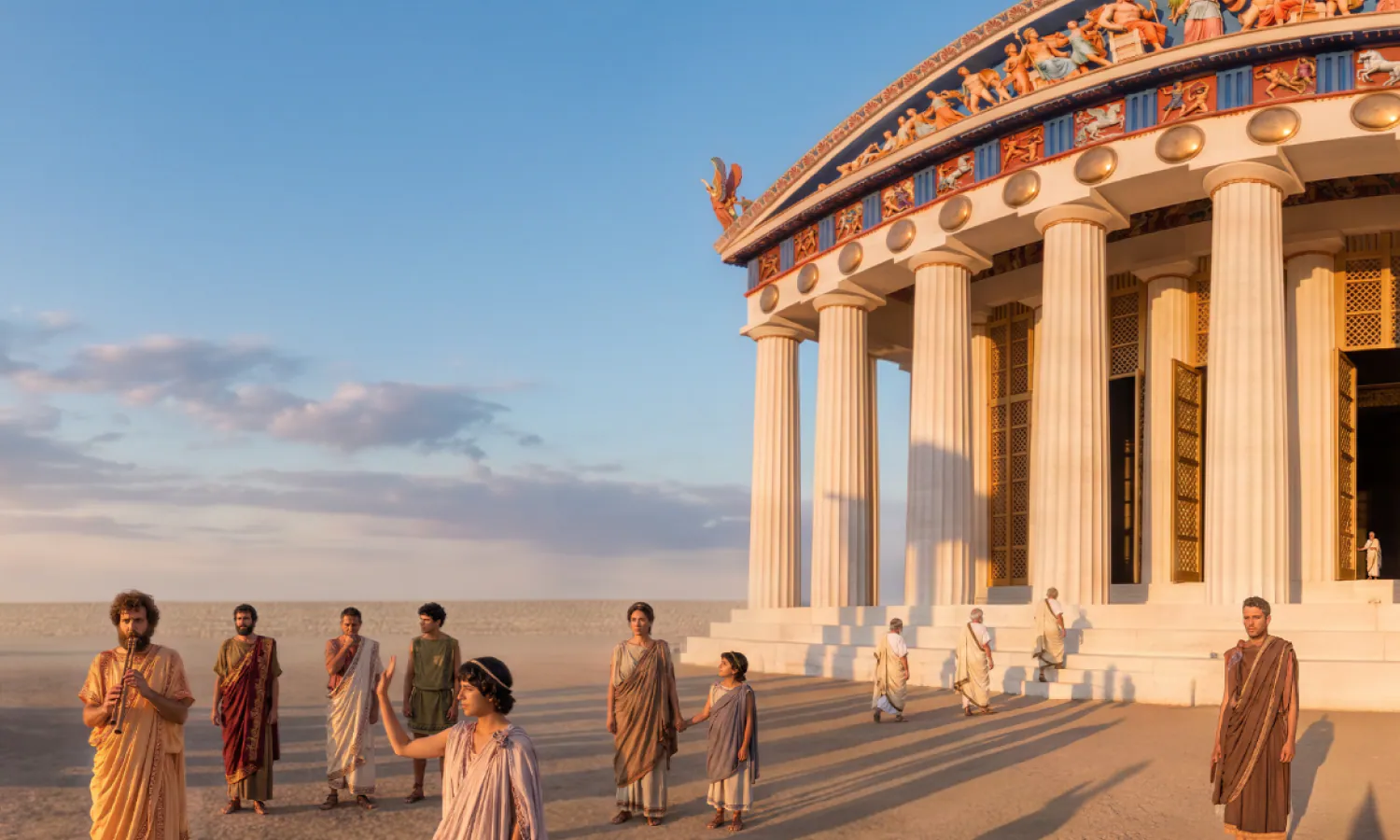
We've just completed our next panorama in TimeLens: the Acropolis as it appeared during the Roman period, with the Temple of Rome and Augustus standing proudly alongside the Parthenon.
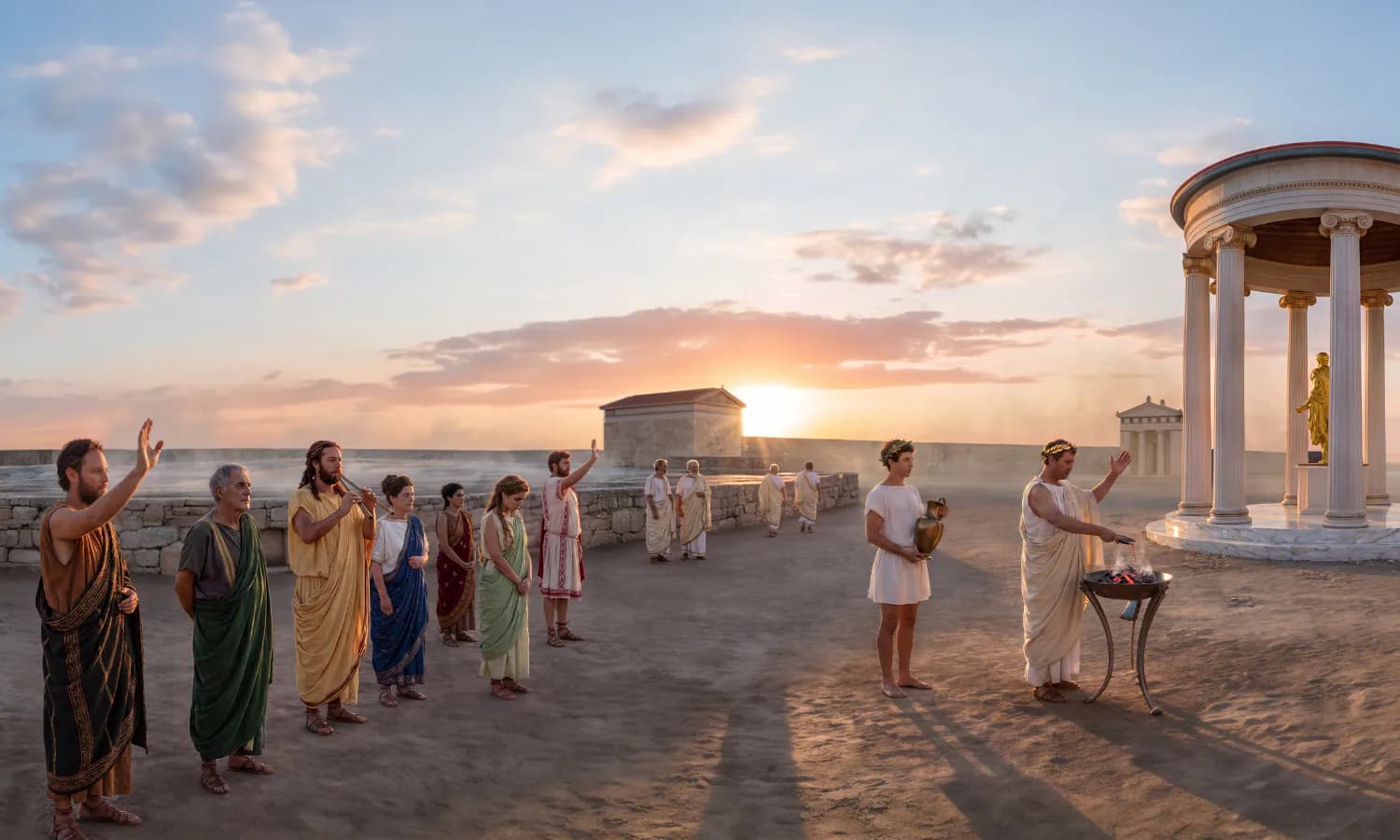
This is a fascinating moment in history to reconstruct. Rome has taken political control of Athens, yet something remarkable has happened. Greek religion and culture remain vibrant, alive, and deeply woven into daily life. You see it most clearly in the rituals themselves, where Roman and Greek traditions have merged into something entirely new. The priests still honour the gods in the Greek way, but now they do so under Roman authority. It's a snapshot of cultural continuity amid political change.
A sunrise over sacred ground at the Acropolis in Roman Times
We wanted to capture a specific moment in this panorama: sunrise over Athens. This is when the priests would open the great doors of the Parthenon each morning, beginning another day of worship. It's the kind of detail that transforms a reconstruction from impressive to truly immersive. You're not just seeing a historical location. You're witnessing the moment the ancient world began its day.
The meticulous work behind the detail
Getting this panorama right required extraordinary care. The Parthenon is one of the great ancient marvels, and we were determined to honour that in our reconstruction.
As always, we worked from the models and expertise of Dimitris Tsalkanis, whose knowledge of Athenian architecture grounds everything we build. For the finer details, we invested significant research into the metopes and pediment of the Parthenon's front. We studied what remains of these sculptures today, extracted what we could from historical sketches and records, and then reconstructed them as faithfully as possible.
Then came the recolouring. Ancient Greek temples were not the austere white marble we see in ruins today. They were painted in vibrant, brilliant colours. Based on pigment analysis and historical research, we've brought those colours back. When you stand in TimeLens and look up at the Parthenon's front, you're seeing something that scholars believe is as close to the original as we can get. It's genuinely stunning to behold.
Why this matters
This is the work that defines TimeLens: historical accuracy married with immersive, beautiful reconstruction. Every detail serves a purpose. Every colour choice is grounded in research. Every moment captured, from that sunrise to the expression on a priest's face, is designed to transport you to another time.
We're building something that goes beyond tourism or entertainment. We're making invisible history visible.
Support the next panorama
We have thirteen more TimeSpots in development for Athens alone, and this work takes time, research, and resources. If you love exploring history through immersive experiences, and want to see more panoramas like the Acropolis in Roman times brought to life, we'd be honoured to have you join us on Patreon. Your support directly enables us to continue this meticulous work and bring more of history's greatest places into the app.
Want to support us in this Athens project? You can do so for a few euros a month via Patreon.