The River Comes to Life
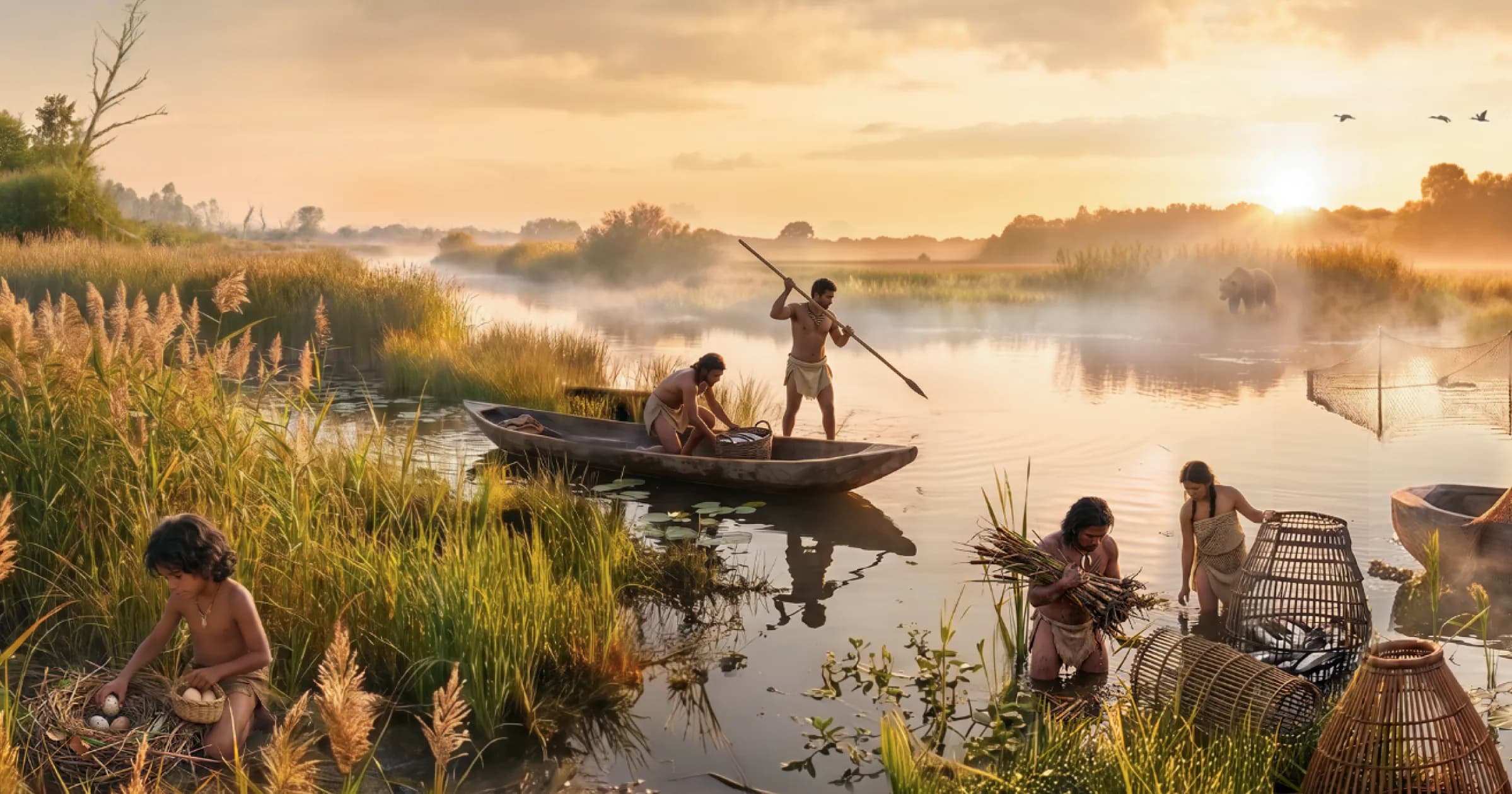
A while ago we shared our collaboration between Hunebedcentrum and TimeLens. Now the first scene has fully come to life. To see the full scene, you will need to visit the museum next year, but we happily share a sneak peek here.
The scene takes you to the river near the prehistoric village, where people combine farming with gathering food from the surrounding landscape. You can see different daily activities unfolding around the river: foraging for berries, collecting eggs, fishing among the reeds, preparing hunted game, and gathering edible plants from the marshes.
One of the things we wanted to capture most in this scene is that prehistoric life was deeply connected to nature. These communities were not isolated from the landscape around them. Even though they heavily relied on agriculture they still greatly relied on the river, forests, and other parts of wild nature for everything they needed. In the scene you can see the villagers gathering food but also essentials for crafting what they need in their lives.
A huge amount of work goes into transforming the simple base scene into something immersive and historically accurate. The type of trees, plants and animals are all based on historic research, provided to us by the experts at Hunebedcentrum. Of course the same goes for the clothing, tools and even the look of the people themselves. Of course, we might still make mistakes or miss something. Feel free to reach out to let us know if you spot something so we can still change it.
Now that this one is done in draft, we move on to the next prehistoric scenes. Seven more to go! After that we review all of them fully as a total package before publishing.
This scene is part of our ongoing collaboration with Hunebedcentrum, reconstructing eight scenes of prehistoric life around the hunebeds of Drenthe.