What Did Solomon's Temple Look Like? A Journey Through Its Courts
Solomon's Temple was not one room. It was a sequence, ring within ring, each one closer to the sacred than the last, and closed to almost everyone before the very end. Standing at its outer edge, an ordinary person in ancient Jerusalem could see, at most, the start of what lay beyond. Understanding the Temple means understanding exactly how far you were, and were not, allowed to go.
The outer court: as far as almost everyone got
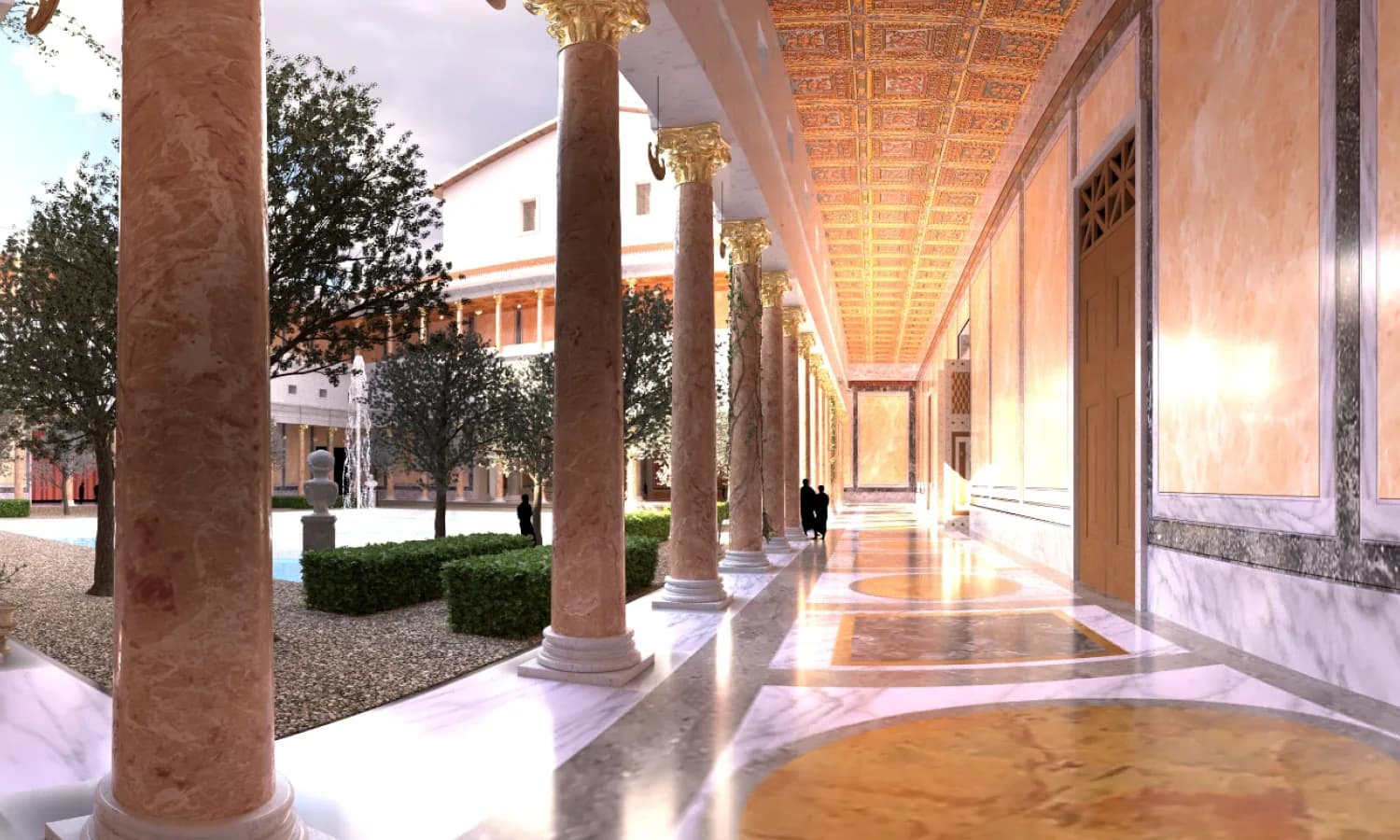
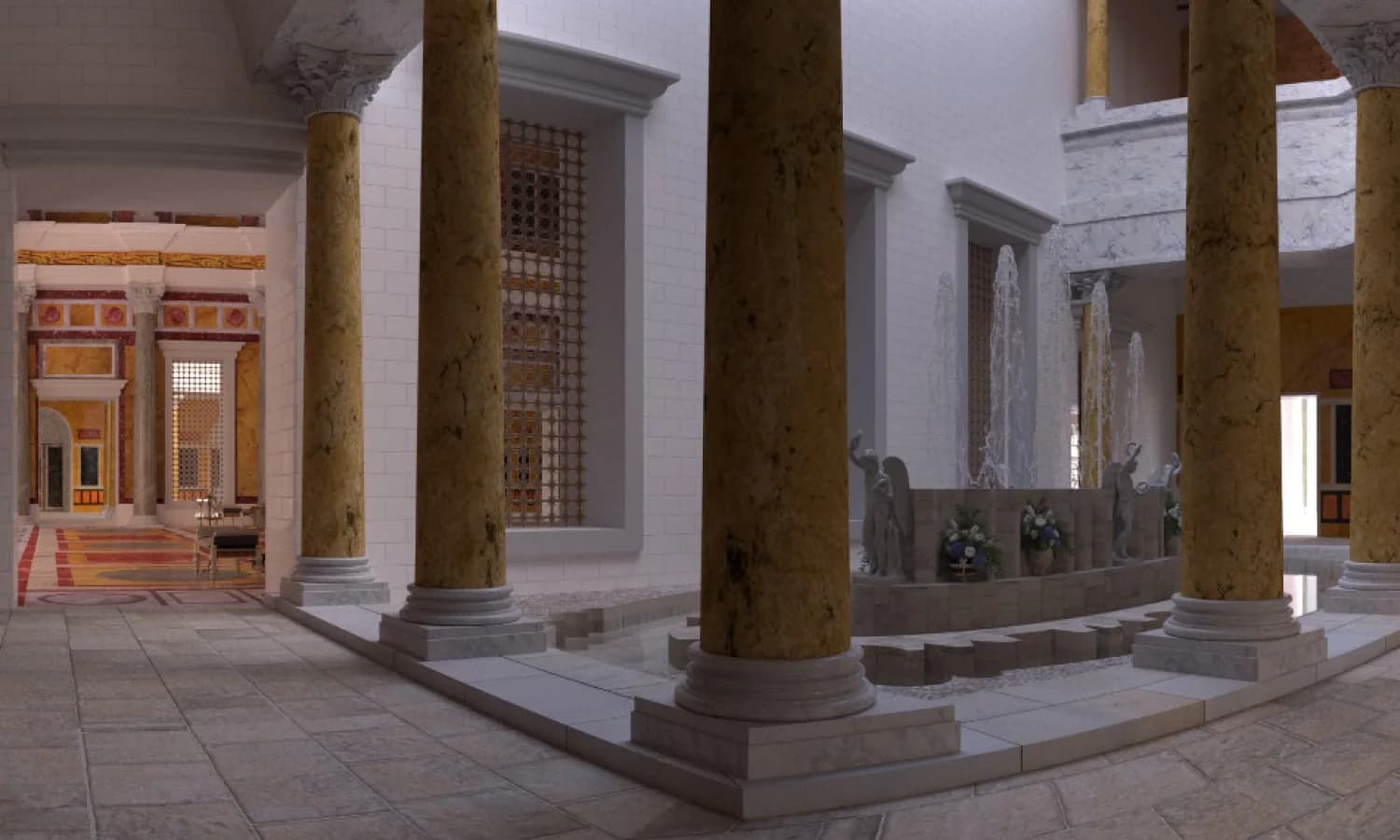
For most people, the Temple began and ended here. The outer court was open to anyone, the meeting point of the city with the sacred, filled with noise, animals and the footsteps of people carrying an offering, a basket of grain, a jar of oil or wine. Ahead stood a wall put by the old accounts at around ten metres high, with a cedar gate bound in bronze. Past it lay the inner courtyard, reserved for priests and Levites, the Israelite tribe entrusted with maintaining the Temple. That wall was, for most people who ever stood in this city, the closest they came.
The priests' court: the working heart of the Temple
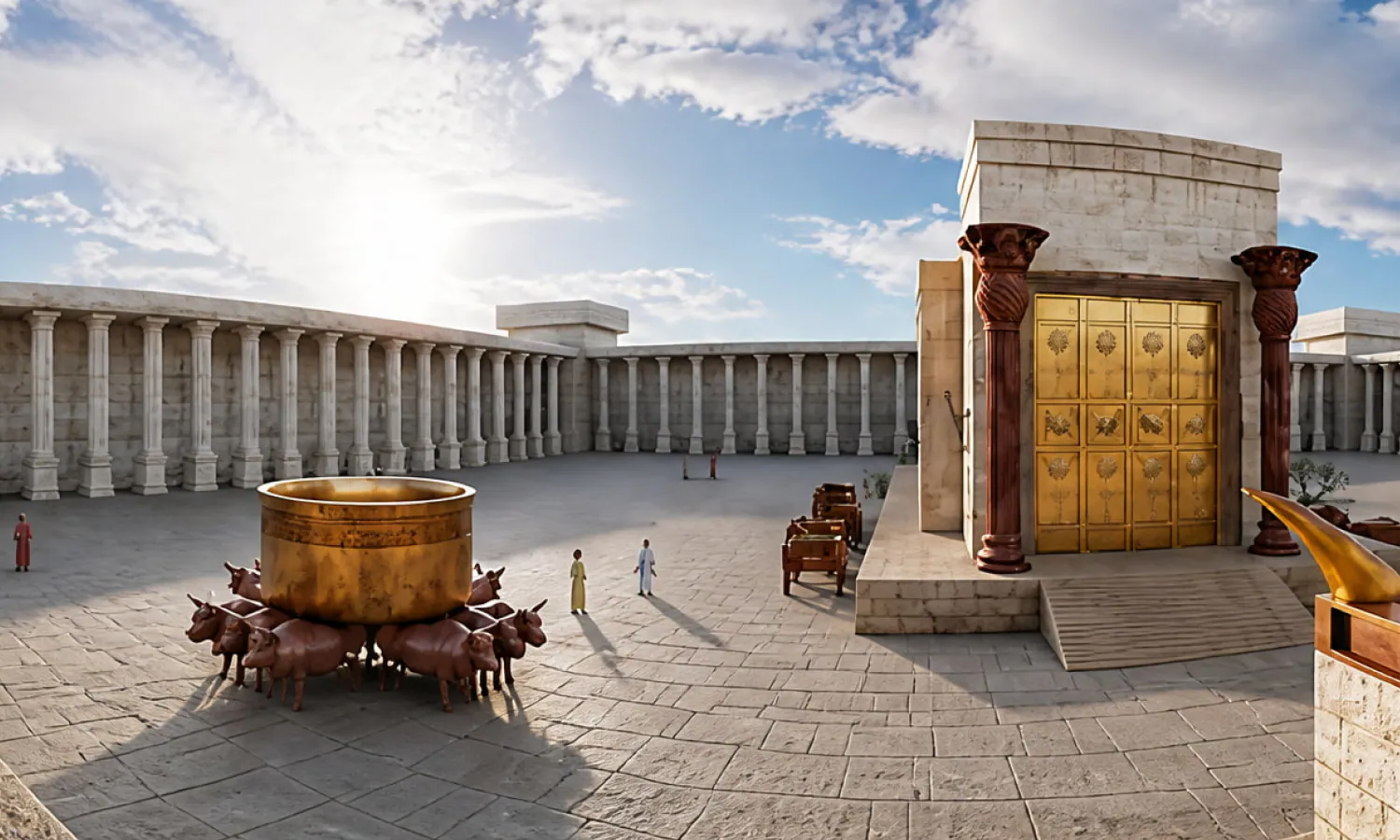
Only priests, and a few exceptions, passed beyond that wall. Here stood the great bronze Sea, a basin some five metres across resting on twelve bronze oxen representing the twelve tribes of Israel, where priests cleansed themselves before any ritual. Ten wheeled bronze basins, called lavers, stood along the Temple's walls for rinsing offerings. All of this bronze work is credited to a single craftsman, Hiram of Tyre, sent by the king of Tyre to assist Solomon, his mixed heritage making him a bridge between the two peoples. Even the priesthood itself was divided into twenty four rotating divisions, so only a fraction of them ever served, and stood here, at any one time.
The altar: as high as anyone could climb
Rising above the priests' court stood the altar itself, roughly ten metres on each side, reached not by steps but by a gentle ramp, a detail tradition explains carefully: stairs would have risked exposing a priest in his simple linen robes with every stride. At its centre burned a fire said never to go out, feeding a lamb offered every morning and every evening. From its height, for the first time, the Temple building itself came properly into view, its entrance flanked by two great bronze pillars named Jachin and Boaz, pillars we look at in detail here.
The Sanctuary: gold, bread and light
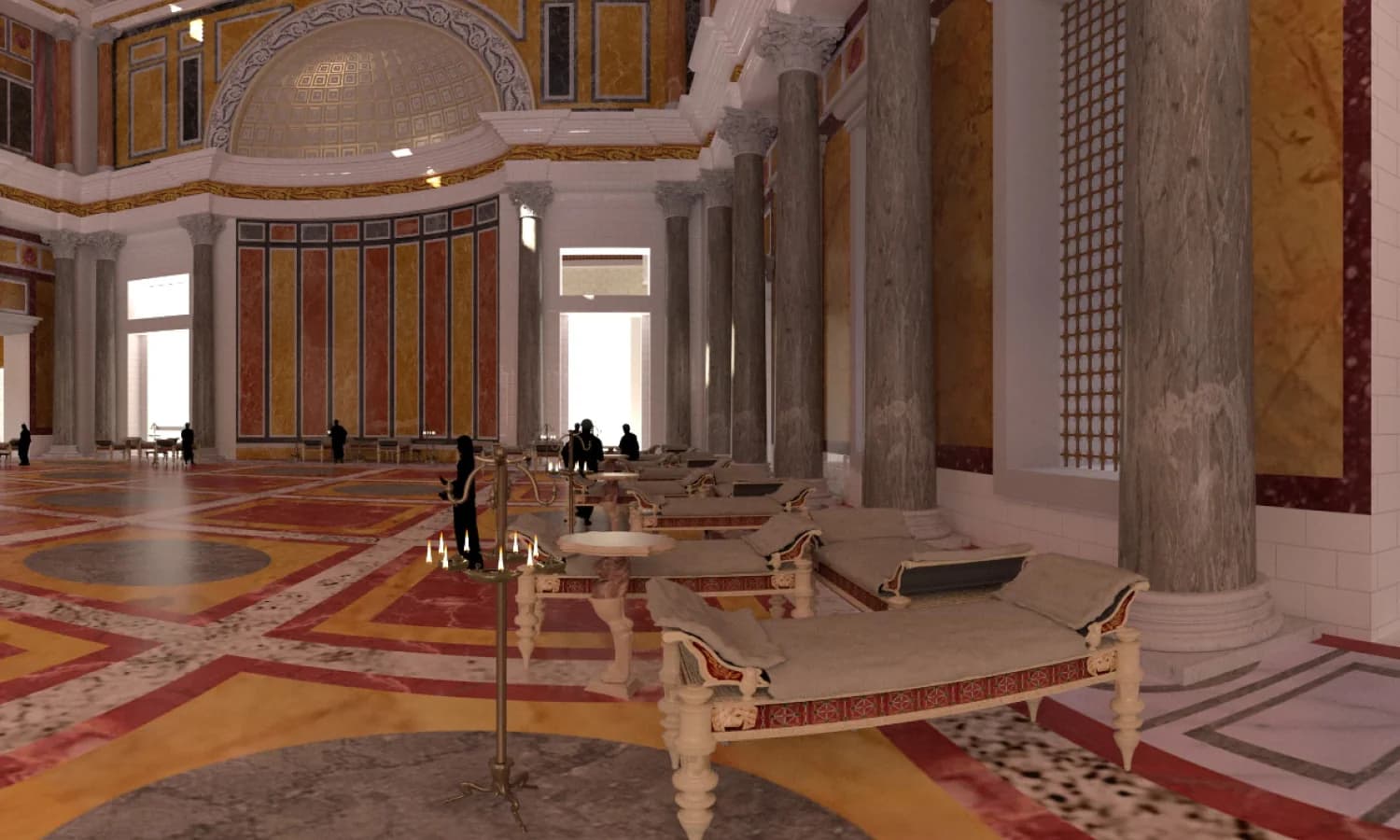
Past the pillars lay the Sanctuary, where tradition holds that every surface, walls, ceiling and floor, was covered in gold leaf over cedar. Eleven golden tables lined one wall for the ceremonial bread, mirrored by eleven golden lamps on the other, sustenance and light facing one another across the room. At its centre stood a small golden altar for incense, and behind it hung a woven curtain, dense enough, later rabbinic accounts say, that almost no light passed through it. Beyond that curtain lay the most sacred room of all.
The Holy of Holies: the room almost no one saw
At the very heart of the Temple stood the Holy of Holies, a perfect cube according to the old measurements, containing the Ark of the Covenant beneath two enormous golden cherubim. Only one person was ever permitted inside, the High Priest, and only once a year, on Yom Kippur. Everyone else, priest and king included, lived their whole life without ever seeing this room. We look at what tradition says stood beneath it here.
Rank made visible in stone
Standing at the outer wall, an ordinary person in ancient Jerusalem understood their place in this world instantly, without a word spoken, simply by how far they were permitted to walk before the stone itself told them to stop. That is what makes Solomon's Temple such a remarkable place to reconstruct: not one building, but five degrees of access, each one hidden from the last.
See it as it stood
In TimeLens, you can stand at each of these thresholds in turn, from the outer court to the Holy of Holies itself, and see the Temple reconstructed exactly as the old accounts describe it. This reconstruction is created with Ofer Becker and Becker Innovation, whose model of Solomon's Temple brings this vanished building back to the very ground it once stood on.