Sara Roelofs: The Woman Who Translated Between Two Worlds
In a colony where a single misunderstanding could tip trade into war, one of the most important people in New Amsterdam was a woman who could speak to both sides. Her name was Sara Roelofs, and from a house near the waterfront she helped hold together the fragile relationship between the Dutch and the Lenape.
From Amsterdam to Manhattan
Sara Roelofs was born in Amsterdam in 1627 to Scandinavian parents, and came to New Amsterdam as a child. Her father died young, and her mother, Anneke Jans, later married the colony's minister, which placed the family among New Amsterdam's leading households. In 1642 Sara married Hans Kierstede, a surgeon for the Dutch West India Company, and moved into the house that TimeLens now reconstructs in full.
A rare and trusted interpreter
Sara grew fluent in the Munsee language of the Lenape and became an interpreter in everything from trade deals to peace treaties. Her position was unusual. Most interpreters in the colony were Native, and almost none were women. Yet both sides trusted her. The Lenape because, as a woman, she was seen as standing apart from the colony's political and commercial interests, and the Dutch because she was connected to nearly every powerful family in New Netherland. She interpreted at major negotiations, including treaty talks led by Stuyvesant, and built a close relationship with the influential Lenape-Munsee leader Oratam.
A house full of life
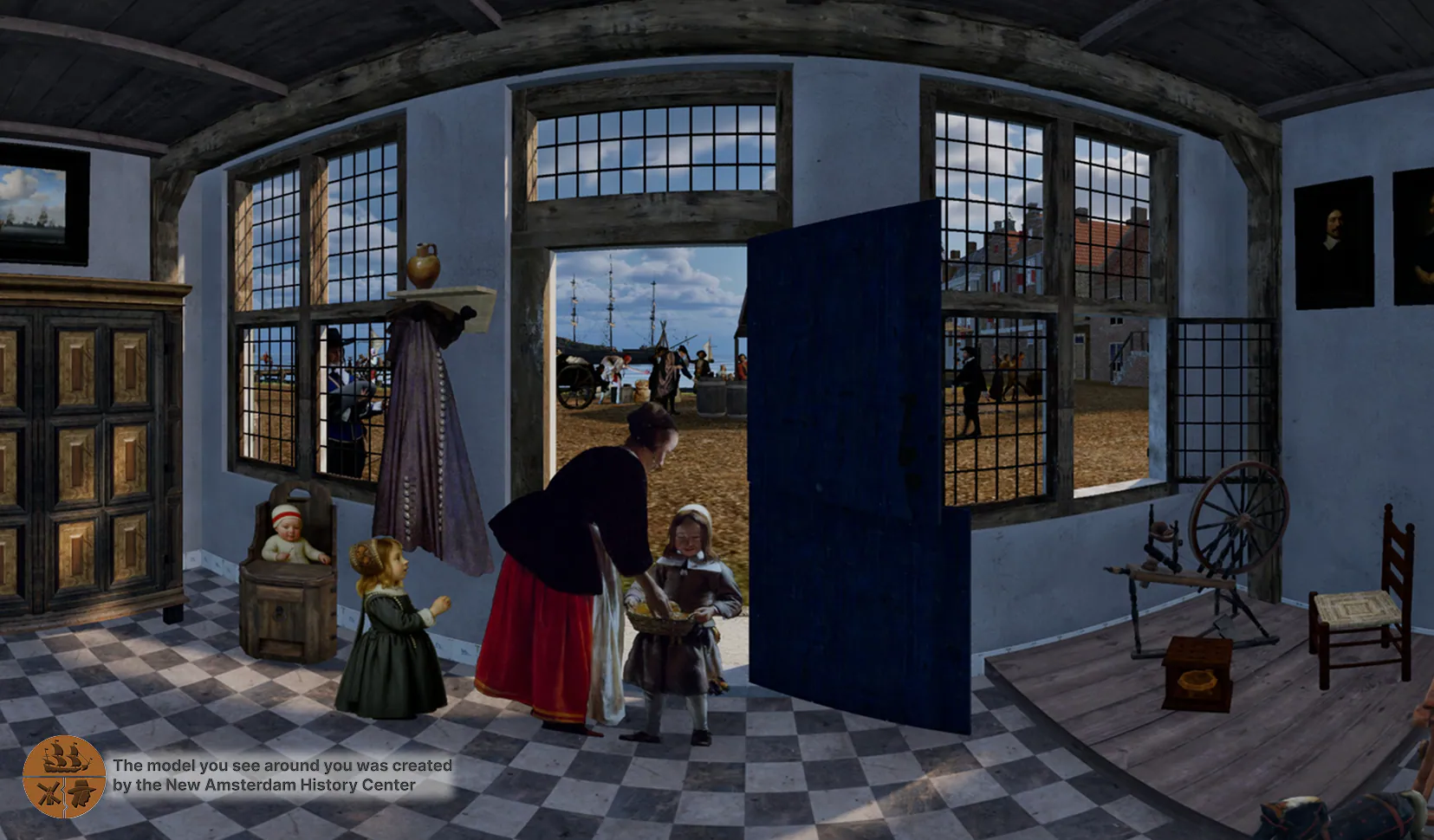
Sara's home was also a centre of trade. Native people came to exchange goods such as venison and corn, and in 1661 the city ordered a dedicated trading house for them built right in front of the Kierstede home. Inside, the household was large and busy: Sara, Hans, their many children, and, as in many well off New Amsterdam homes, enslaved people who carried out much of the daily work.
The fuller story of Sara Roelofs
That last detail deserves honesty. Sara was a skilled mediator between cultures, and she also lived within, and benefited from, a society built partly on slavery. The records show her household included an enslaved African woman and an enslaved Native girl, and in later life she passed enslaved people to her children. Holding both truths at once, the bridge builder and the slaveholder, is part of telling New Amsterdam's story honestly rather than romantically.
Stand in Sara's house
Sara's home is marked on the Castello Plan, and in TimeLens you can stand inside it room by room, from the front room that looked out toward the trading house to the attic where enslaved workers slept. It is one of the most complete windows into daily life in New Amsterdam that we have. Sara's house, like every New Amsterdam scene in TimeLens, is only thanks to the research and 3D models of the New Amsterdam History Center.