The Panathenaic Procession, Explained Through the Parthenon Frieze
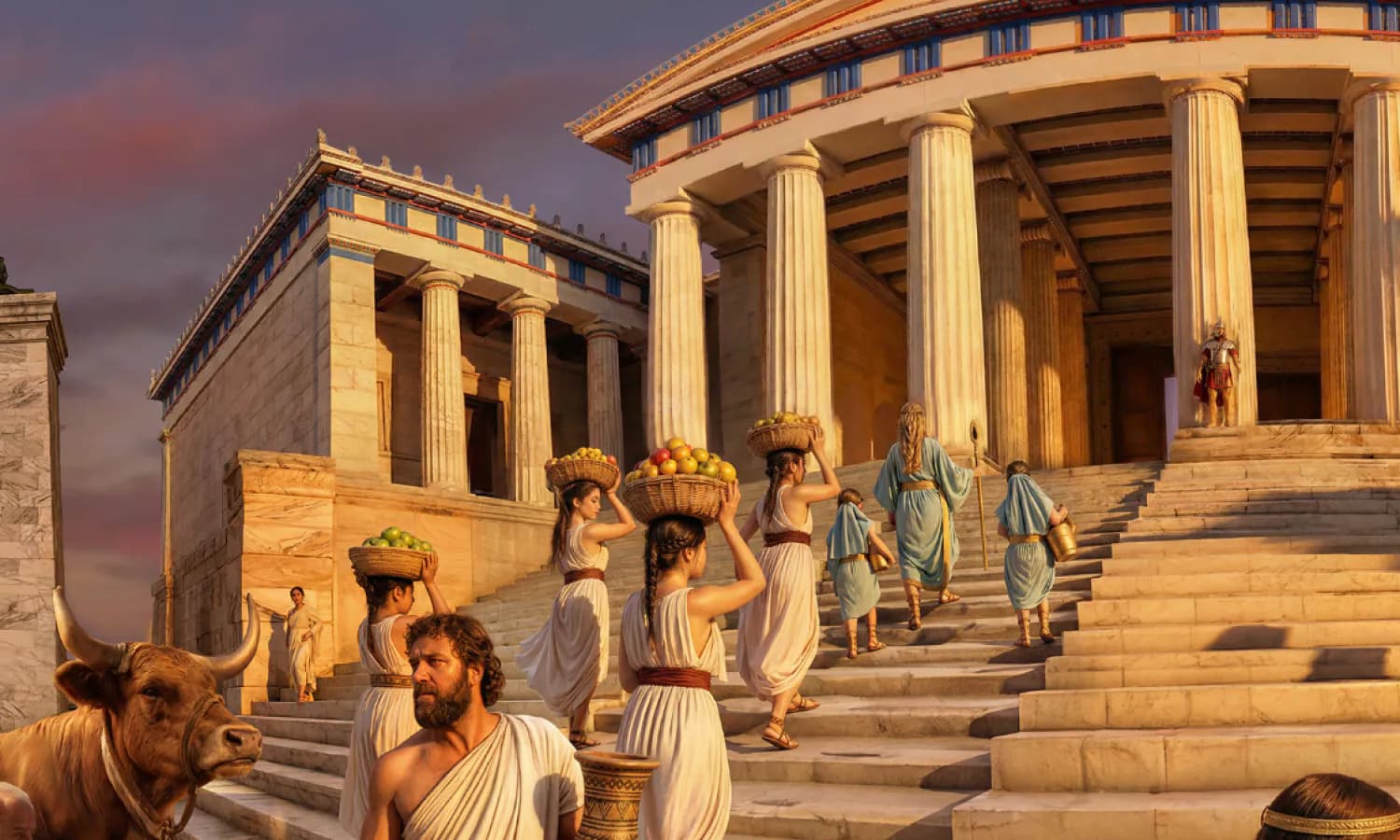
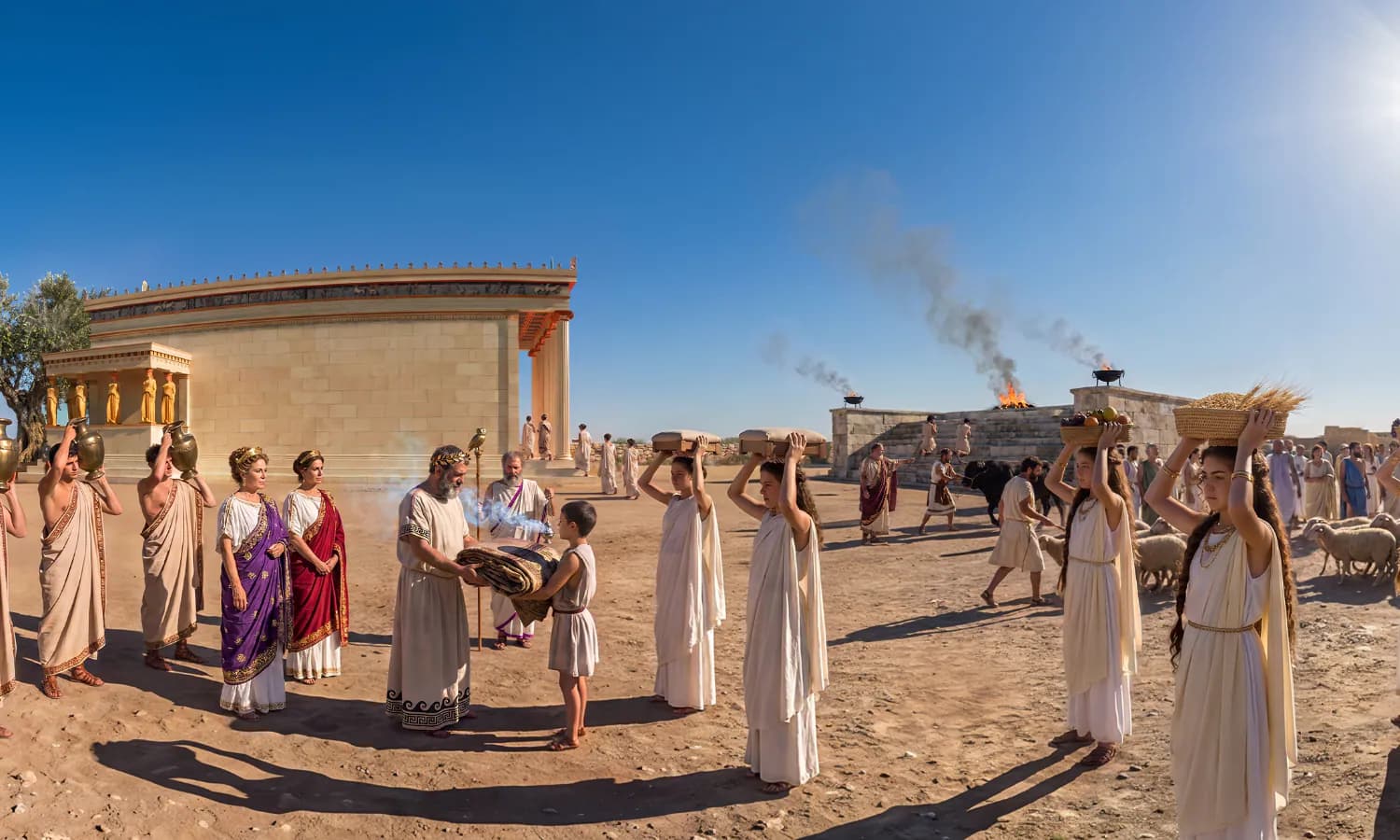
Imagine the whole of Athens in motion: horsemen and chariots, musicians, elders and young women, all making their way up to the Acropolis to honour the goddess Athena. This was the Panathenaic procession, the high point of the city's greatest festival, and it was carved in marble around the Parthenon itself.
The festival that united a city
Every four years, from 566 BC onward, Athens held the Great Panathenaia, a grand celebration of Athena's birthday and of the city she protected. At its centre was a single gift: a new peplos, a robe woven over many months by a chosen group of Athenian women. The procession carried it up to the Acropolis, where it was presented to Athena's ancient statue. The festival was open to Athenian citizens, and it bound the city together in shared pride and devotion.
The Panathenaic procession carved in stone
To crown the Parthenon, the sculptor Phidias designed a continuous band of relief that ran around the top of the temple's inner wall. It stretched roughly 160 metres in length and stood about a metre high. Two streams of figures began at the southwest corner and moved in opposite directions, meeting at last above the eastern doorway.
Along its length the frieze shows the procession in extraordinary variety: riders controlling their horses, chariots in motion, attendants leading cattle and sheep to sacrifice, water carriers, musicians, elders and young women bearing offerings. At the climax, over the east door, the new peplos is folded and presented, watched by the seated gods of Olympos, shown larger than the mortals around them.
The meaning behind the marble
What makes the frieze remarkable is its subject. Temple sculpture usually showed myth and legend, yet here, unusually, ordinary Athenians take the central role. Some scholars have even suggested a hidden tribute to the men who fell at the Battle of Marathon. Whatever the full intention, the message is clear: this is a celebration of the city itself, its citizens, its piety and its civic pride. In its day the frieze was painted in colour and fitted with bronze reins and details, dazzling high on the wall.
Where the frieze is today
The surviving sculptures are now divided between the Acropolis Museum in Athens and the British Museum in London, where they are known as the Parthenon Marbles. Seen block by block, it can be hard to grasp the procession as a single, living event. The Acropolis Museum does a remarkable job to show the remaining pieces of the frieze in their original position. Definitely worth a visit!
See the Panathenaic procession come to life
This is where TimeLens steps in. Standing on the Acropolis, you see the Panathenaic procession restored around you at its very climax, the moment the city gathers to honour its goddess, instead of scattered fragments in distant galleries.
Want to support us in this Athens project? You can do so for a few euros a month via Patreon.